
Cauliflower Stuffing
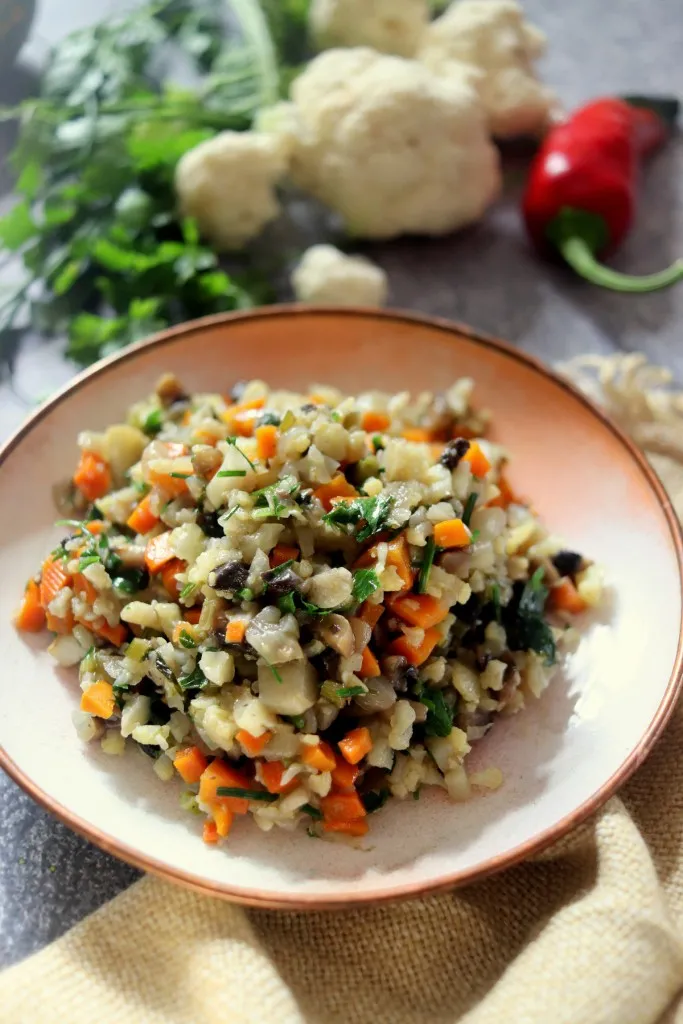
This cauliflower stuffing has all the flavors you want from a holiday stuffing, with no bread in sight. Cauliflower, mushrooms, onion, carrots, and celery cook down in butter with fresh rosemary, sage, and parsley until they’re tender and savory, then soak up a splash of broth at the end. It’s made in one skillet on the stovetop in about 45 minutes, so it won’t fight the turkey for oven space.
I could eat stuffing any time of year, but I try to cut back on bread where I can, and this is how I get my fix. It also plays nicely at Thanksgiving. Since it’s cooked in a skillet instead of inside the bird, you can make a pan of this next to your classic bread stuffing and give everyone at the table an option.
About This Recipe
Everything cooks uncovered in one large skillet in three stages: the onion, carrots, and celery go first, then the cauliflower and mushrooms, then the herbs and broth. Cooking uncovered lets the moisture escape so the stuffing turns tender and savory instead of watery. It reheats well, so you can make it a day ahead of a holiday meal and warm it in the oven at 325°F while the turkey rests.

Recipe Snapshot
Prep Time: 15 minutes
Cook Time: 30 minutes
Total Time: 45 minutes
Servings: 4
Difficulty: Easy
Perfect For: Thanksgiving, holiday dinners, and a vegetable side for roast chicken
Main Ingredients: Cauliflower, mushrooms, onion, carrots, celery, butter, rosemary, sage, parsley, and broth
Why You’ll Love This Recipe
Why This Recipe Works
Most of what makes stuffing taste like stuffing isn’t the bread. It’s the onion and celery softened in butter, plus a big hit of sage and rosemary. This recipe keeps all of that and swaps the bread for cauliflower, which has a mild flavor and soaks up butter, herbs, and broth the same way bread cubes do.
Mushrooms do a lot of quiet work here. They brown and add a deep, savory flavor, and their meaty chew fills in for the heft you’d normally get from bread. Carrots bring a little sweetness and color.
The pan stays uncovered the whole time. Cauliflower and mushrooms both give off water as they cook, and a lid would trap it and steam everything soft. Uncovered, that moisture cooks off, the vegetables pick up some color, and the broth at the end has room to reduce into the vegetables instead of pooling in the pan.
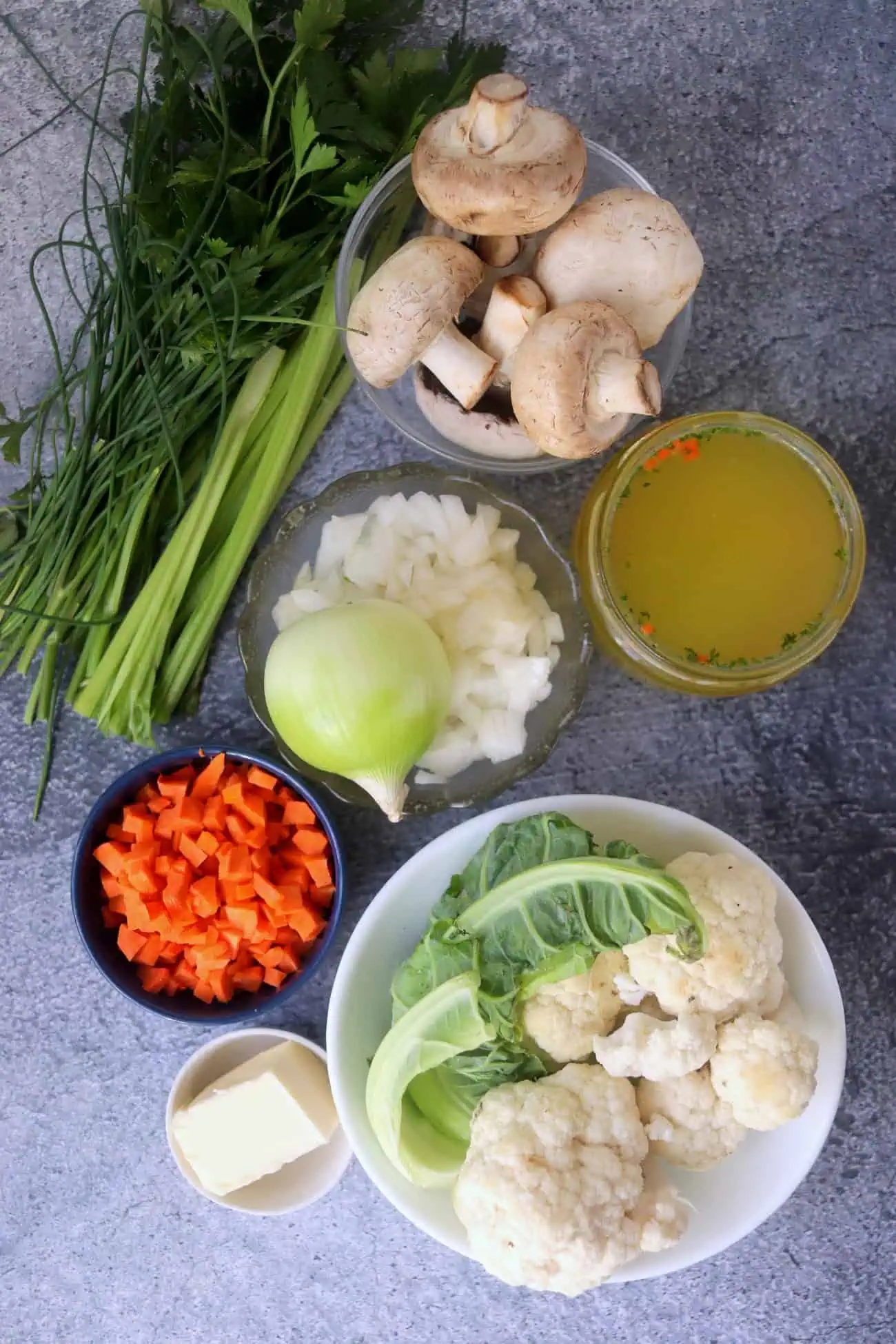
The Ingredient Breakdown
How to Make Cauliflower Stuffing
Step 1: Soften the Onion, Carrot, and Celery
Melt the butter in a large skillet over medium heat. Add the chopped onions, carrots, and celery, then sauté for 7–8 minutes, stirring often.
The onions should look softened and translucent, and the carrots should be starting to soften. Lower the heat if the vegetables brown too quickly before they become tender.
Step 2: Add the Cauliflower and Mushrooms
Stir in the chopped cauliflower and mushrooms, then season with salt and pepper. Cook for another 8–10 minutes, stirring regularly, until the cauliflower begins to turn tender.
Keep the skillet uncovered. If the mushrooms release a lot of water, let that moisture cook down rather than moving straight to the broth while the vegetables are sitting in liquid.
Step 3: Stir in the Herbs and Broth
Add the parsley, rosemary, and sage, stirring to distribute them through the vegetables. Pour in the broth and continue cooking uncovered for about 10 minutes, stirring occasionally.
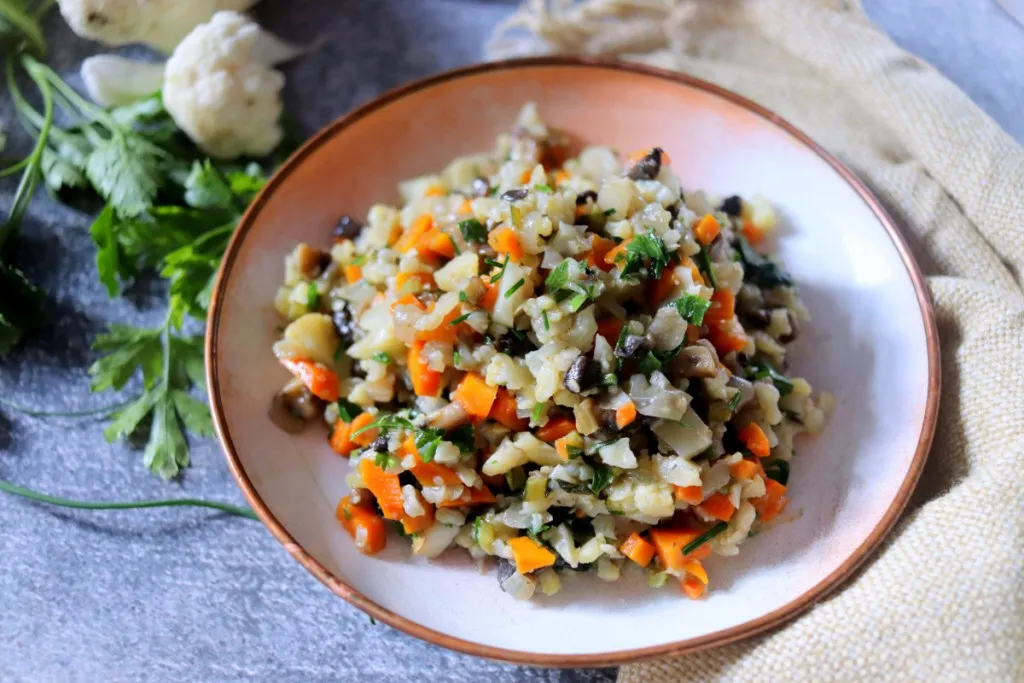
The stuffing is ready when the vegetables are tender but still hold their shape and no excess broth is pooling in the skillet. Taste, adjust the seasoning, and serve warm.
How to Keep Cauliflower Stuffing From Getting Watery
Dry the cauliflower after washing it, and use a pan wide enough to stir the vegetables comfortably. A deep pile of vegetables holds in steam and takes longer to cook dry.
If the vegetables are already tender but liquid remains, increase the heat slightly and stir gently as it evaporates. Watch closely so the bottom doesn’t scorch. There’s no need to keep cooking until every trace of moisture is gone; the goal is a moist side dish without loose liquid.
For a double batch, I recommend using two skillets rather than crowding everything into one. That gives the vegetables room to cook and helps protect their texture.
Storage and Make-Ahead Tips
Make ahead: Chop the vegetables and herbs the day before and refrigerate them in covered containers. Keep the cauliflower and mushrooms separate from the onion, carrot, and celery so they’re ready to add at the right step. Cooking closer to serving gives you the most control over the final texture.
Fridge: Refrigerate leftovers in a shallow, airtight container within 2 hours and use within 3–4 days.
Freezer: Freeze in an airtight container or freezer bag for up to 3 months for best quality. Expect the cauliflower and mushrooms to be softer after thawing. Thaw overnight in the refrigerator rather than on the counter.
Reheating: Warm in a skillet over medium-low heat, stirring gently, until the stuffing reaches 165°F throughout. Keep it uncovered if there’s excess moisture; add a small splash of broth only if it seems dry.
More Side Dishes to Try
If you’re planning a holiday menu, these recipes give you a few more options:
- Instant Pot Green Bean Casserole for another holiday side that uses a different appliance.
- Cheesy Mashed Potatoes with Bacon for a rich potato side to serve alongside the vegetables.
- Cauliflower Mash if you’d like another way to serve cauliflower.
- Air Fryer Carrots for a carrot side to round out dinner.
If you make this cauliflower stuffing, leave a rating and tell me what you served it with. Thanksgiving gets plenty of attention, but a good side dish deserves a spot at Sunday dinner, too!
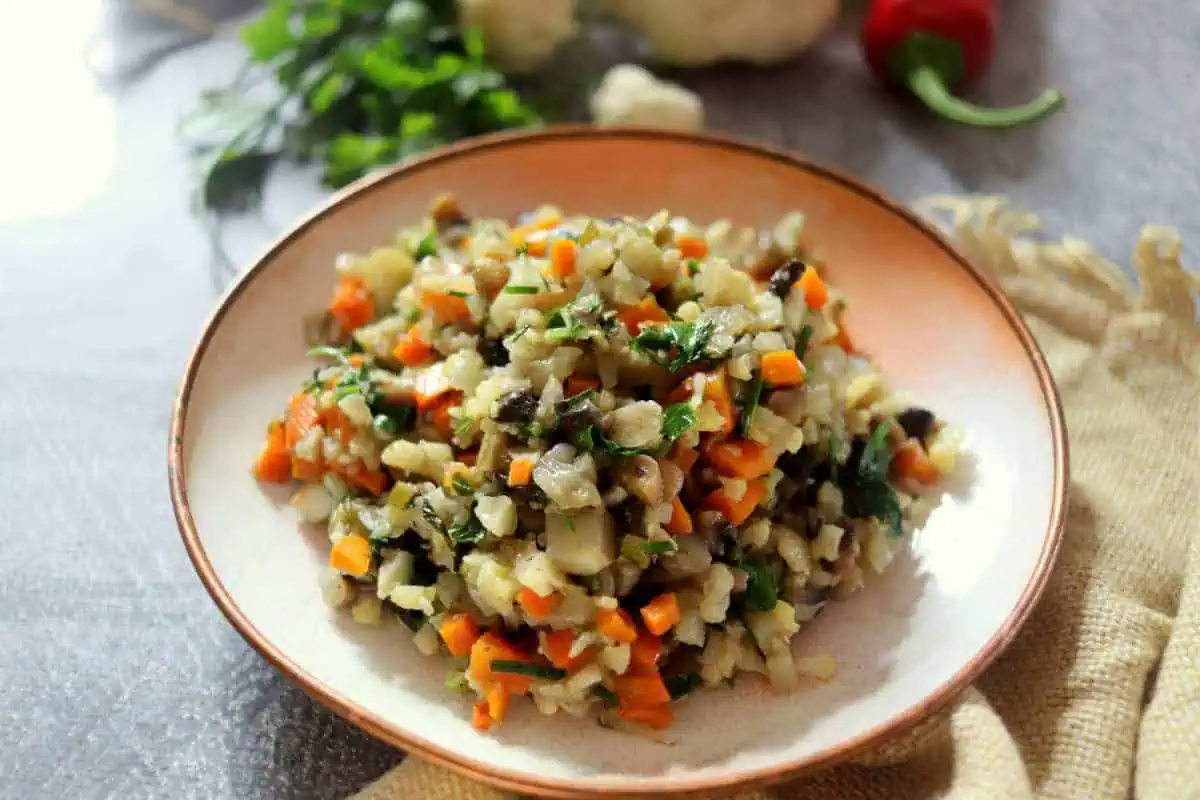
Cauliflower Stuffing
Ingredients
- 4 tbsp. butter
- 2 onion chopped
- 2 large carrots peeled and chopped
- 2 celery stalks chopped or thinly sliced
- 1 small head cauliflower chopped
- 1 cup mushrooms chopped
- Kosher salt
- Freshly ground black pepper
- 1/4 cup freshly chopped parsley
- 2 tbsp. freshly chopped rosemary
- 1 tbsp. freshly chopped sage or 1 tsp. ground sage
- 1/2 cup low-sodium vegetable or chicken broth
Instructions
- Melt the butter in a large, wide skillet over medium heat. Add the onions, carrots, and celery. Sauté for 7–8 minutes, stirring frequently, until softened.
- Add the cauliflower and mushrooms. Season with salt and pepper. Cook uncovered for 8–10 minutes, stirring regularly, until the cauliflower begins to become tender. Let excess moisture released by the mushrooms cook down before adding the broth.
- Stir in the parsley, rosemary, and sage. Add the broth and cook uncovered for about 10 minutes, stirring occasionally, until the vegetables are tender but still hold their shape and no excess liquid remains in the bottom of the skillet.
- Taste and adjust the seasoning. Serve warm. Use texture as your final guide; vegetable size and pan crowding can affect the cooking time.
Nutrition
Notes
Notes
- Cut carrots smaller than the cauliflower so they soften on a similar schedule.
- Use vegetable broth for a vegetarian version. Use vegetable broth and plant-based butter for a vegan version. For gluten-free preparation, check broth and packaged ingredient labels.
- For a double batch, use two skillets to avoid crowding and trapping excess moisture.
- Refrigerate in a shallow, airtight container within 2 hours and use within 3–4 days. Freeze for up to 3 months for best quality; thaw in the refrigerator. The vegetables will soften after freezing.
- Reheat leftovers to 165°F, stirring gently. Cook off excess moisture or add a small splash of broth if needed.
Tried this recipe?
Let us know how it was!Cauliflower Stuffing Questions
Can I use cauliflower rice instead?
Chopped cauliflower is the best fit for the method as written. Cauliflower rice has much smaller pieces and cooks faster, so following the same timing could leave it mushy. Stick with chopped florets for this version.
Can I use frozen cauliflower?
Fresh cauliflower gives you more control over piece size and moisture. Frozen cauliflower can release extra water and soften differently, so it isn’t a direct swap for the recipe’s timing. This version is written for fresh cauliflower.
Does it taste like bread stuffing?
It has the buttery herbs and savory vegetables you associate with stuffing, but the texture is different. You’ll have distinct pieces of cauliflower and vegetables rather than soft bread with crisp baked edges. Serve it as a vegetable alternative, or put both versions on the table.

Can this be frozen?
You can totally freeze the cauliflower stuffing with no problem!