
Inside the Earth’s Most Isolated Island and the Shocking Food Struggles of its Residents
Deep in the Bay of Bengal lies North Sentinel Island, part of India’s Andaman Islands. It is widely regarded as one of the most isolated inhabited places on Earth. The Sentinelese people, an Indigenous tribe, have lived there for thousands of years with little to no outside contact. Because the island is legally protected and off-limits to visitors, much about daily life remains unknown. What is understood, however, is that food access depends entirely on the island’s natural environment.
Living Without Modern Supply Chains

North Sentinel Island remains one of the most isolated inhabited places in the world. Unlike remote communities that still receive occasional ships or aircraft, the Sentinelese have no external supply routes at all. There are no grocery imports, refrigeration systems, or packaged goods stored for later use. Their survival depends entirely on hunting, fishing, and foraging within the island’s natural environment. This complete isolation means they are not connected to modern agriculture or global trade networks. Instead, daily life relies on deep ecological knowledge passed down through generations.
Hunting and Gathering

Limited anthropological observations conducted strictly from a distance due to legal protections suggest that the Sentinelese hunt wild pigs and birds using bows and arrows. They are also believed to gather fruits, roots, and other edible plants from the island’s dense tropical forests. This food system is seasonal and closely tied to environmental cycles. Without farming infrastructure or imported reserves, food availability shifts naturally with rainfall, temperature, and plant growth patterns. Their subsistence model depends on maintaining ecological balance rather than maximizing production or storage.
Fishing and Coastal Resources
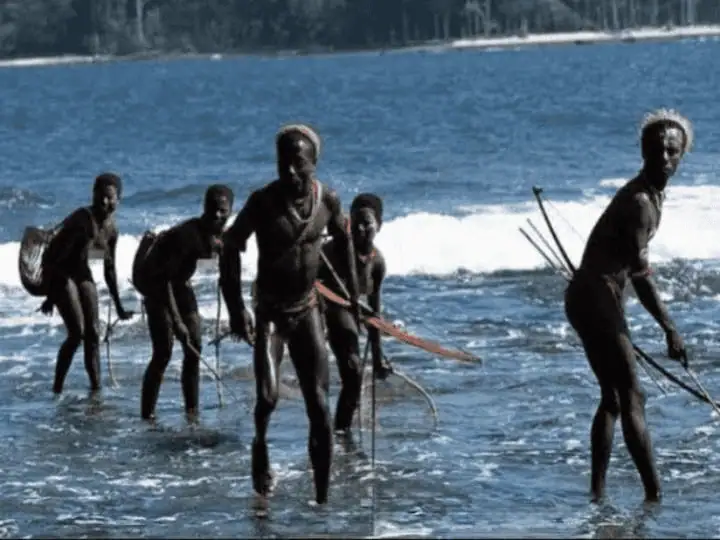
The waters surrounding North Sentinel Island provide another essential food source. The Sentinelese are believed to fish in shallow coastal areas and collect shellfish along reefs and tidal zones. Coral ecosystems likely play a critical role in sustaining protein intake. However, fishing methods appear limited to traditional tools and small watercraft, restricting catch size and range. Weather conditions, tidal shifts, and seasonal fish movements directly influence availability. In the absence of engines or commercial gear, access to marine resources remains entirely dependent on environmental patterns and practical local expertise.
Environmental Vulnerability

On North Sentinel Island, the food system is entirely ecosystem-based, which makes environmental stability critical. Severe storms, rising sea levels, or shifts in wildlife populations could directly influence food availability. Without agricultural infrastructure, preserved imports, or external reserves, there is no secondary safety net if natural resources decline. Seasonal balance and biodiversity are central to sustaining daily life. Resilience, in this context, depends not on stockpiles or global trade, but on maintaining harmony within the island’s forests, reefs, and surrounding waters.
Legal Protection and Non-Interference

North Sentinel Island is legally protected under Indian law, with a strict exclusion zone enforced by the Government of India authorities. Contact with the Sentinelese is prohibited to safeguard their autonomy and reduce the risk of disease transmission. As a result, no outside food aid, infrastructure, or agricultural assistance is introduced. This non-interference policy ensures the tribe’s independence but also means their food system remains entirely self-reliant. Preservation of cultural and biological integrity takes precedence over integration into modern supply networks.
A Different Definition of Food Security
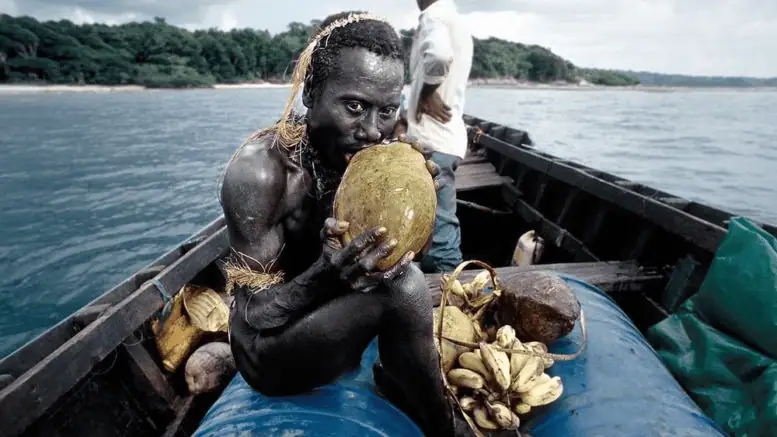
For most societies, food security relies on transportation systems, refrigeration, storage facilities, and global trade agreements. On North Sentinel Island, survival is rooted in inherited knowledge of land, tides, wildlife patterns, and seasonal rhythms. While isolation introduces vulnerability to environmental change, it also shields the community from global price volatility and industrial dependency. Their existence highlights an alternative framework of sustenance one built on localized expertise rather than infrastructure. It serves as a reminder that food security can take fundamentally different forms outside contemporary economic systems.
