
Why Air Fryer Fries Turn Out Soggy (And How to Make Them Crispy)
TL;DR: Soggy air fryer fries almost always come down to three things: too much starch on the surface, surface moisture that wasn’t dried off, or an overcrowded basket that traps steam instead of crisping. Fix those three things and you’ll get fries that are golden, crispy, and satisfying every time. This post covers fresh-cut fries, frozen fries, and everything in between.
Air fryer fries should be the easy win. You cut some potatoes, toss them in the basket, and expect golden, crunchy fries in under 20 minutes. So when they come out soft, pale, and a little limp, it’s genuinely annoying.
Here’s the good news: soggy air fryer fries are almost always fixable. And once you understand why they’re going wrong, you’ll know exactly what to do differently. Let’s dig in.
Why Are My Air Fryer Fries Coming Out Soggy?
Air fryer fries turn out soggy because of excess starch, surface moisture, too much oil, or an overcrowded basket. Any one of these is enough to trap steam against your fries instead of letting the hot air crisp them up. Most of the time, it’s a combination of two or three of these happening at once.
The air fryer works by circulating hot, fast-moving air around your food. When something interferes with that airflow, or when the surface of the fry stays wet, you end up with steamed potatoes instead of crispy fries. Understanding this is the key to fixing the problem.
Here’s what’s actually going wrong and how to correct it.
The Starch Problem: Why Fresh Fries Need a Soak
Potatoes are naturally high in starch, and that surface starch is one of the biggest reasons homemade fries turn out soft instead of crispy. When you cut a raw potato, starch is immediately released onto the surface of each piece. If that starch goes straight into the air fryer, it forms a gummy layer that blocks browning and holds onto moisture.
The fix is a cold water soak before cooking. Soaking cut fries in cold water for at least 30 minutes pulls excess starch off the surface, which makes browning much easier and gives you a crispier result. You’ll actually see the water turn cloudy as the starch releases, which is a good sign you’re on the right track.
Culinary expert Peter Som recommends soaking for 30 minutes minimum, up to an hour, noting that skipping this step gives you the opposite of what you want. Idaho Potato experts agree that even a quick soak helps. Overnight in the fridge works too if you want to prep ahead.
Don’t skip the cold water part. Warm or hot water starts to cook the outside of the potato before you’re ready, which works against you.
After soaking, drain the fries completely and move straight to the drying step.
Drying Is Non-Negotiable
This is the step most people rush, and it’s the one that makes the biggest difference.
After your soak, your fries are wet. Put them straight into the air fryer and all that surface water turns to steam the moment they hit the heat. Steam is the enemy of crispiness. If the moisture isn’t effectively removed, the fries will steam instead of fry, resulting in a soft, soggy texture no matter how good your other technique is.
Spread the soaked fries out on a clean kitchen towel or a few layers of paper towels. Pat them down thoroughly, then let them air dry for a few minutes if you have time. The drier the surface, the faster they’ll crisp.
This also applies to fries you’ve rinsed without soaking. A two-minute rinse in a colander under cold running water removes surface starch quickly. But you still need to dry them well before they go in the basket.
How Much Oil Is the Right Amount?
You need oil to get crispy fries. A light coating helps heat transfer to the surface of the fry and creates the browning process that gives you that golden, crunchy exterior. Foods like fries need a light coating of oil to get crispy, and skipping it leads to dry, chewy results.
But too much oil causes its own problems. Excess oil makes things greasy and can cause the fries to steam instead of crisp, especially when the extra drips down into the drawer and smokes. A light, even coat is all you need.
The easiest method: toss your dried fries in a bowl with about a teaspoon of oil per serving, just enough to lightly coat each piece. A refillable oil spray bottle also works well for an even coat without overdoing it. High-smoke-point oils like avocado oil, light olive oil, or vegetable oil are your best choices.
Temperature, Timing, and the Shake
Getting the temperature right makes a big difference between crispy fries and sad fries.
For fresh-cut homemade fries, 375°F to 400°F is the sweet spot. Start the cook at 375°F for about 15 minutes to cook the inside through, then bump the temperature to 400°F for the last 5 minutes to finish with a crispy exterior. This two-stage method is what gives you that fluffy inside and crunchy outside combination.
For frozen fries, the approach is different. Cook them directly from frozen at 400°F for 12 to 15 minutes, shaking the basket halfway through. Never thaw frozen fries before air frying. Thawing creates excess surface moisture that leads to soggier results, which is the opposite of what you want. Frozen fries are designed to go straight from the freezer into the heat.
The shake is non-negotiable for both types. Give the basket a good shake at the halfway point to flip the fries and expose every surface to the hot air. If you forget this step, the fries sitting on the bottom of the basket will stay pale and soft while the ones on top get all the attention.
The Overcrowding Trap
This one shows up in almost every air fryer problem and fries are no exception.
When you pile fries on top of each other or pack them in too tightly, the hot air can’t circulate around them properly. The fries on top get crispy while the ones underneath steam in the moisture that has nowhere to go. The result is fries that are unevenly cooked and soft in the middle of the batch.
Single layer is the rule. Every fry needs its own space in the basket. This might mean cooking in two or three batches if you’re making fries for a crowd, but that extra time is worth it. Keep the first batch warm in an oven set to 200°F while the second batch finishes.
It can feel wasteful to use that much basket space for one serving of fries. But the alternative is a full basket of soggy results, and that’s a harder loss to recover from.
Frozen Fries vs. Fresh Cut: What Changes?
The process is different enough that it’s worth covering both separately.
For fresh-cut fries, follow the full soak, dry, oil, and two-stage cook method described above. Use russet potatoes for the best results. Their high starch content gives you a fluffy interior, and once that surface starch is removed with a soak, they crisp up beautifully. Cut them to a uniform thickness (about a quarter inch) so everything cooks at the same rate.
For frozen fries, skip the soak and the drying steps entirely. Frozen fries are already partially cooked and often pre-coated with oil, which means they’re designed to go straight from the freezer to the basket. Cook from frozen at 400°F, shake halfway through, and they’ll crisp up on their own.
The one thing that applies to both: a single layer, the right temperature, and a shake at the halfway point. Get those three things right and you’re most of the way there.
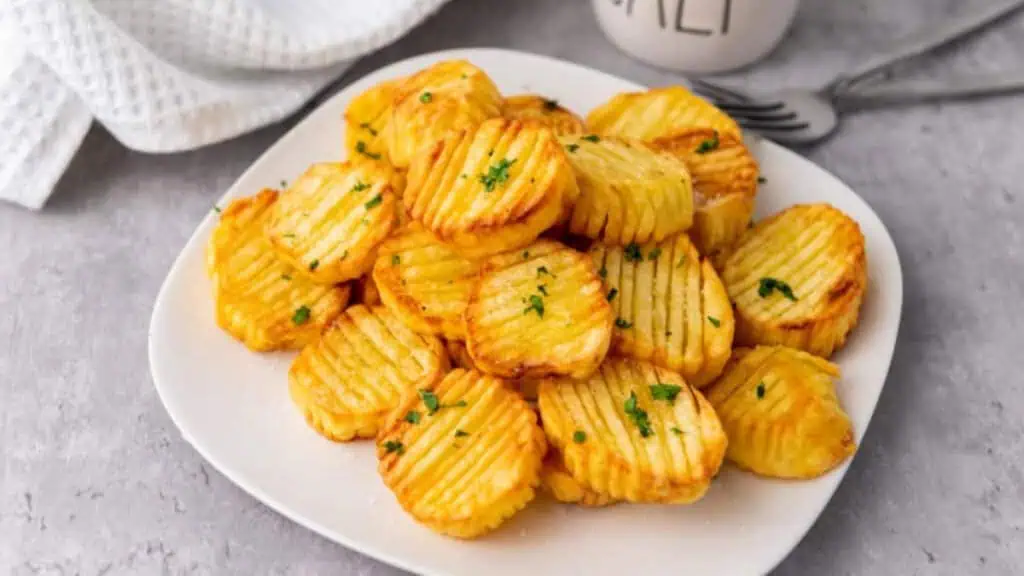
For more air fryer potato recipes to practice on, try the FoodnService Air Fryer Parmesan Potatoes, Air Fryer Roasted Potatoes, or the fan-favorite Air Fryer Accordion Potatoes. All three use techniques that build on what’s covered in this post.
Your Crispy Fry Checklist
Before your fries go in the basket, run through this quick checklist.
Head over to the FoodnService air fryer recipe collection for more ideas, and follow along on Pinterest and TikTok for weekly air fryer tips straight to your feed.
Frequently Asked Questions
Do I have to soak fresh-cut fries before air frying? You don’t have to, but you’ll get noticeably better results if you do. A 30-minute cold water soak removes the surface starch that causes fries to turn out soft and gummy instead of crispy. At minimum, rinse your cut fries under cold running water and pat them very dry before cooking. Even that quick step makes a difference.
Why are my frozen fries soggy in the air fryer? The most common reason is thawing them first or overcrowding the basket. Frozen fries should go straight from the freezer into a preheated basket in a single layer. Thawing creates surface moisture that steams the fries instead of crisping them. Cook at 400°F and shake the basket halfway through.
What temperature should I use for air fryer fries? For fresh homemade fries, start at 375°F for the first 12 to 15 minutes, then increase to 400°F for the last 5 minutes to crisp the exterior. For frozen fries, use 400°F the whole way through for 12 to 15 minutes. Always shake or toss the basket at the halfway point.
Why do my fries crisp on top but stay soft on the bottom? This almost always means the basket is too full. When fries are stacked or touching, the ones on the bottom sit in trapped steam instead of circulating hot air. Cook in a single layer with a little space between each fry, and shake the basket halfway through to flip them.
Can I reheat leftover fries in the air fryer? Yes, and the air fryer is honestly the best way to do it. Reheat at 375°F for 3 to 5 minutes until hot and crispy. Spread them in a single layer and don’t microwave them first. The air fryer brings back most of the original crunch that other reheating methods can’t.
