
5 Interior Kitchen Features That Separate a Chef’s Kitchen From a Regular One
For the serious home cook, a kitchen isn’t just a place to prepare meals; it is a high-stakes workspace where precision and flow are paramount. While a “regular” kitchen balances aesthetics with general domestic needs, a chef’s kitchen is an engineered environment built for the rigors of gourmet production.
In 2026, as high-end residential design moves toward “quiet luxury” and professional performance, the gap between these two spaces has never been clearer. If you are looking to elevate your culinary game, these are the five interior features that separate the amateurs from the pros.
High-BTU Professional Ranges
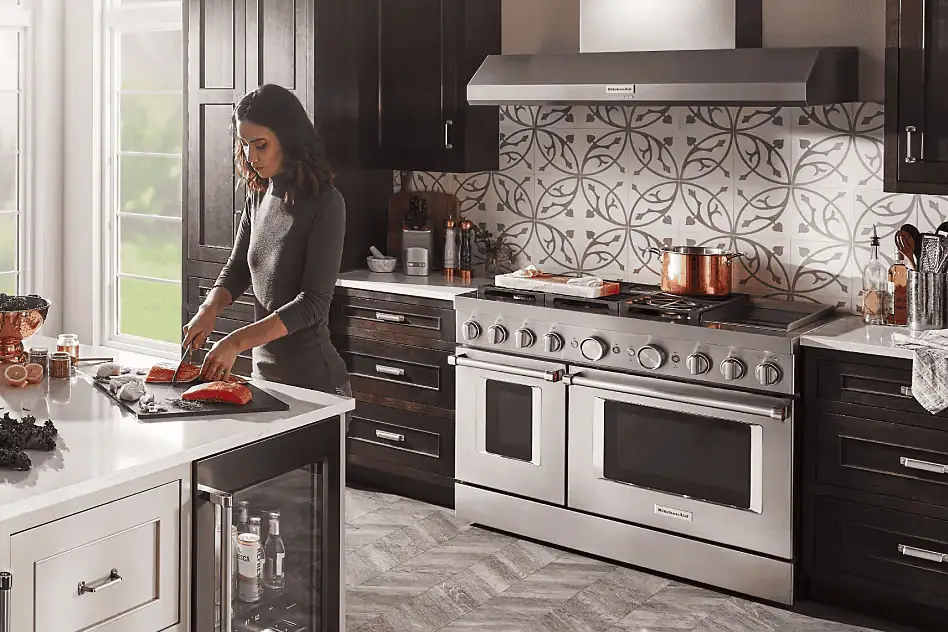
The heartbeat of any chef’s kitchen is a commercial-grade range that offers significantly higher BTU (British Thermal Units) than a standard household model. While a regular stove might max out at 12,000 BTUs, professional-series burners often reach 20,000 to 25,000 BTUs, allowing for the rapid searing and instant temperature control required for restaurant-quality results.
These ranges frequently feature six to eight burners, integrated griddles, and dual ovens, one of which is typically a convection or steam oven. This power ensures that water boils in seconds and that delicate sauces can be held at a precise simmer without scorching.
Strategic Functional “Work Zones”
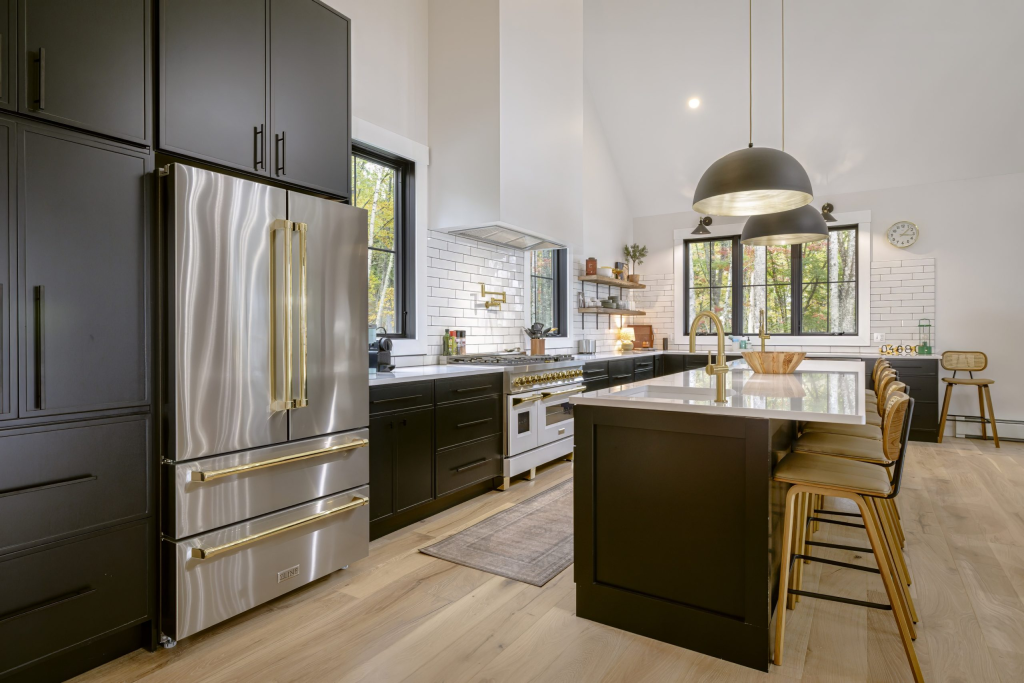
Traditional kitchens often follow the “work triangle,” but a chef’s kitchen in 2026 is designed around specific “work zones” to minimize unnecessary movement. This involves dedicated areas for prep, cooking, cleaning, and plating, each equipped with the tools needed for that specific task.
A professional layout might feature a 36-inch unbroken prep counter near the sink, while the range and a pot filler anchor the cooking zone. This “economy of motion” allows a cook to pivot rather than walk, ensuring that high-intensity service remains organized and fluid even when multiple people are in the kitchen.
Dual Sinks and Smart Water Access

One sink is rarely enough for a chef who is managing prep and cleanup simultaneously. A true chef’s kitchen features at least two deep, stainless steel sinks: a primary “cleanup” sink for large pots and a secondary “prep” sink, often located on the kitchen island. In 2026, these are often paired with commercial-style pre-rinse faucets featuring flexible hoses and high-pressure sprays.
Many pro-level kitchens also incorporate touchless or motion-activated faucets to prevent cross-contamination when handling raw proteins, alongside instant hot water dispensers that provide near-boiling water for blanching or deglazing on demand.
Professional-Grade Ventilation Systems

Cooking at high heat produces significant smoke, grease, and heat, which a standard microwave vent simply cannot handle. A chef’s kitchen requires a high-performance range hood capable of moving at least 600 to 1,200 CFM (cubic feet per minute) of air. These systems are often deeper and wider than the cooking surface to ensure they capture every bit of steam and vapor.
In 2026, “discreet extraction” is a major trend, with these powerful motors being hidden behind custom cabinetry or integrated into the ceiling to maintain a sleek look while still providing the heavy-duty filtration required for a clean, odor-free home.
Durable, Heat-Resistant Surfaces

While marble is beautiful, a chef’s kitchen prioritizes surfaces that can withstand the “rigors of the line.” This means a heavy reliance on engineered quartz, sintered stone, or professional stainless steel countertops. Stainless steel is especially prized by pros because it is non-porous, antibacterial, and allows a cook to place a scorching hot pan directly onto the surface without fear of damage.
These kitchens also utilize “full-height” backsplashes to eliminate grout lines where food particles can hide. In 2026, the focus is on low-maintenance durability that looks as good as it performs under pressure.
