
This New York City Deli Is So Iconic, People Say There’s Nothing Like It in the World
Katz’s Delicatessen is more than just a place to grab a sandwich; it is a living monument to the immigrant history of New York City’s Lower East Side. Founded in 1888, it has survived economic depressions, world wars, and the rapid gentrification of Manhattan to remain the most famous deli on the planet. According to historical records, it was originally established as a small communal gathering place for the neighborhood’s Jewish population before expanding into the massive operation it is today.
This article explores why food critics and world travelers consistently claim that no other deli can replicate the specific flavor profile or atmosphere of this landmark. We examine the rigorous meat-curing processes and the unique cultural traditions that keep this institution at the top of every culinary bucket list.
The Secret Thirty-Day Curing Process
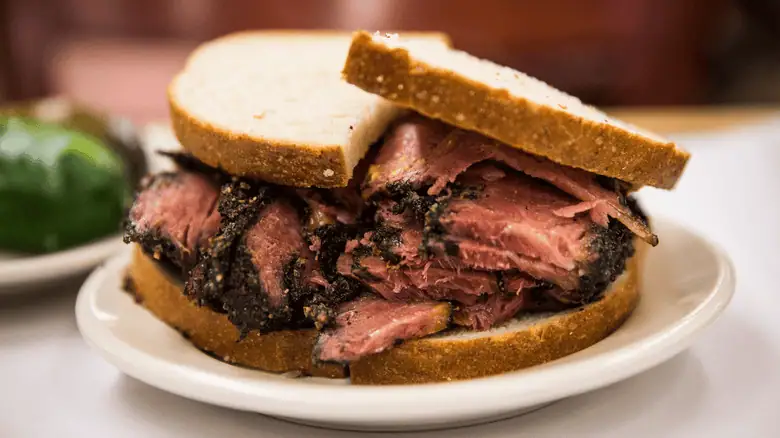
The primary reason people claim there is nothing like Katz’s is the proprietary method they use to prepare their world-famous pastrami and corned beef. While commercial delis often use chemical injections to “flash-cure” meat in a matter of hours, Katz’s adheres to a traditional slow-curing method that takes up to thirty days.
According to food science standards, this extended timeframe allows the spices and brine to penetrate deep into the muscle fibers, resulting in a superior texture and depth of flavor. Once the curing is complete, the meat is smoked for several days and then steamed in the deli’s onsite kitchen to reach peak tenderness. This labor-intensive commitment to quality is why the deli processes several thousand pounds of meat every week for its global fan base.
The Art of the Hand-Carved Sandwich

Unlike modern delicatessens that use electric slicers to ensure uniform thinness, every sandwich at Katz’s is carved by hand by a team of professional cutters. These cutters undergo extensive training to learn how to slice against the grain at a specific angle that preserves the integrity of the fatty brisket. Industry experts note that hand-slicing prevents the meat from being “burnt” by the friction of a high-speed metal blade, which can alter the delicate fat distribution.
Guests are often given a small sample of the meat to taste while they wait, a tradition that ensures satisfaction before the sandwich is even fully assembled. This human touch creates a varying texture in every bite that an automated machine simply cannot replicate, making each visit a unique culinary experience.
The Legendary Ticket and Service System

Entering Katz’s requires navigating a unique and somewhat intimidating ticket system that has remained unchanged for over a century. Every customer is handed a small paper ticket upon entry, which serves as a running tab for every item ordered at different counters throughout the hall. According to local lore and signage, losing this ticket results in a mandatory fifty-dollar fine, a rule that has become a famous part of the deli’s “tough New York” persona.
The hall itself is a cavernous space filled with neon signs and thousands of signed celebrity photos that document the deli’s role in pop culture history. This organized chaos is a vital part of the atmosphere, creating a high-energy environment that reflects the bustling spirit of old-world Manhattan.
Cultural Significance and Global Reach

Katz’s achieved international cinematic fame through its appearance in the 1989 film “When Harry Met Sally,” but its cultural impact extends far beyond Hollywood. During World War II, the deli popularized the slogan “Send a Salami to Your Boy in the Army,” a tradition of shipping non-perishable goods to soldiers that continues to this day. According to logistics data from their shipping department, the deli now sends its vacuum-sealed meats to all fifty states and several international destinations.
Despite this global expansion, the physical location remains a neighborhood anchor that provides a sense of continuity in a constantly changing city. It is one of the few places where high-profile politicians, Hollywood stars, and local construction workers all sit together at the same communal wooden tables.
Why the Value Justifies the Price
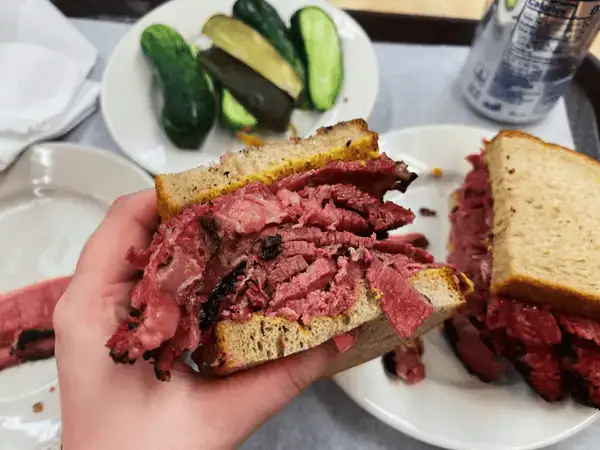
Critics often point to the high price of a Katz’s sandwich, which now frequently exceeds $30, but the sheer volume of the serving often provides a different perspective on value. Each signature sandwich contains nearly a full pound of premium meat, which is significantly more than the three to five ounces found in a standard deli offering. According to nutritional and industry data, the cost of sourcing high-grade USDA brisket and the labor costs of a month-long curing process justify the premium price point.
For most visitors, the meal serves as a double portion that can easily be shared, making the price per person more comparable to other Manhattan mid-range dining. The combination of historical authenticity, artisan craftsmanship, and massive portions ensures that Katz’s remains a singular destination in the global food landscape.
