
What Eating Looked Like in Mid-Century America
In the two decades after World War II, America’s kitchens transformed faster than ever before. A booming economy, new technology, and changing gender roles reshaped what families ate and how they cooked. Mealtime became a showcase of modern living with frozen entrées, canned goods, and shiny new appliances promising ease and efficiency.
The Rise of Convenience Foods

Postwar prosperity and a wave of working mothers fueled demand for ready-made meals. Frozen vegetables, instant mashed potatoes, and boxed desserts became staples of the “modern kitchen.” Betty Crocker, Swanson, and General Mills dominated grocery aisles with products that turned home cooking into a time-saving performance. Convenience wasn’t just practical it was patriotic, symbolizing progress and modernity.
The Birth of the TV Dinner
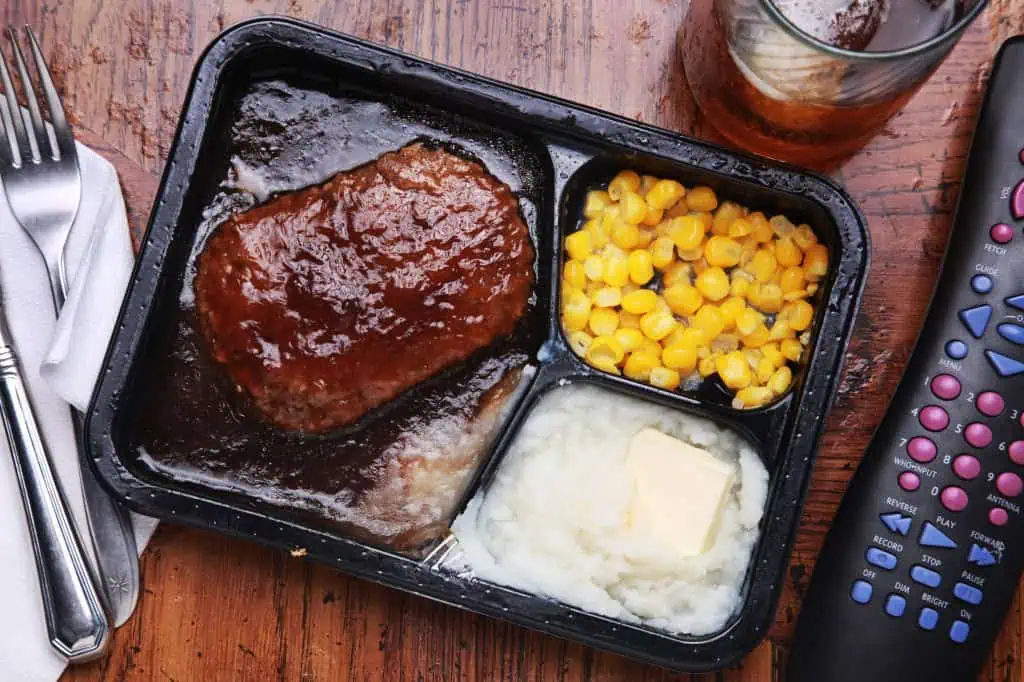
In 1953, Swanson launched the first TV dinner, neatly dividing turkey, peas, and potatoes in a metal tray. The idea of eating while watching television captured the imagination of families everywhere. By the late 1950s, millions of households were gathering around their black-and-white sets, balancing trays on folding tables redefining dinner as entertainment. It marked the beginning of mealtime multitasking.
Advertising and the American Dream

Mid-century food ads sold more than flavor; they sold aspiration. Magazine spreads and TV commercials promised happy families, perfect wives, and gleaming kitchens. Cereal mascots, instant coffee jingles, and bright packaging taught Americans that food could be fun, fast, and fashionable. Brands like Campbell’s, Jell-O, and Spam became cultural icons through clever marketing that blurred the line between necessity and luxury.
The Era of Processed Innovation

Science found its way to the dinner plate. Shelf-stable foods, powdered mixes, and emulsified dressings reflected both Cold War technology and optimism about the future. Processed cheese, canned soup casseroles, and gelatin molds ruled potlucks. While fresh produce took a back seat, Americans embraced the novelty of science in their meals believing that progress meant perfection in every bite.
Dining at Home, Eating Together

Despite the rise of convenience, family meals remained central to American life. Dinner was an event often served at a set time, with Dad carving the roast and Mom serving side dishes. Even as recipes leaned on canned soups and instant mixes, the ritual of gathering around the table symbolized unity. Eating together was as important as what was on the plate.
Global Influence, Americanized

Immigration and travel after the war began to introduce new flavors pizza, chow mein, tacos all adapted to local tastes. These dishes became “American” through convenience: canned sauces, boxed kits, and fast-food interpretations. By the 1960s, suburban cooks could serve spaghetti from a can or tacos from a boxed kit, turning global cuisine into weeknight comfort.
Nostalgia That Endures

Mid-century eating was equal parts innovation and innocence. It reflected confidence in technology and faith in the American home. Today, vintage recipes and retro packaging resurface not for their flavor, but for the feeling they evoke a reminder of a time when dinner promised both comfort and progress.
