
9 Holiday Desserts That Became Traditions by Complete Accident
Not every holiday tradition starts with intention. Some desserts earned their place at the table simply because they were easy, affordable, or happened to work during a particular moment in time. Shortages, advertising, busy schedules, and even kitchen mishaps all played a role in shaping what we now consider “essential” holiday sweets. Over the years, repetition turned coincidence into custom. These nine holiday desserts prove that tradition doesn’t always come from planning, it often comes from circumstance.
Fruitcake

Fruitcake became a holiday staple largely because it was practical, not because it was universally loved. Its dense structure and preserved fruits gave it an unusually long shelf life, making it ideal for gifting and storing before refrigeration was common. Families baked it weeks in advance, and it survived travel and time. Over repeated holidays, fruitcake stuck around simply because it could. What began as a durable dessert eventually became symbolic of the season, even as opinions about it grew sharply divided.
Sugar Cookies

Sugar cookies became a holiday tradition because they were inexpensive, adaptable, and easy to bake in large batches. Families already had the ingredients on hand, and the dough was forgiving enough to involve children. Decorating them became a way to pass time during long winter days rather than a planned ritual. Over time, the activity mattered as much as the dessert itself. What started as a practical baking choice quietly evolved into a cornerstone of holiday celebration.
Pumpkin Pie

Pumpkin pie’s holiday status owes more to agriculture and convenience than culinary ambition. Canned pumpkin made the dessert reliable and repeatable, allowing families to bake the same pie every year without fresh squash. It fit neatly into fall harvest timing and required familiar pantry ingredients. Once it appeared consistently at holiday meals, it became expected. Pumpkin pie didn’t rise because it was exciting, it rose because it was dependable.
Peppermint Bark

Peppermint bark became a holiday favorite almost by accident, thanks to its simplicity. It required no baking, set quickly, and used seasonal flavors already associated with winter. Early versions were often homemade gifts made to stretch budgets. As people repeated the process each year, it became a tradition. Eventually, stores adopted it too. What started as a quick, no-fuss sweet turned into a seasonal staple people now expect to see every December.
Gingerbread Houses

Gingerbread houses weren’t originally about eating dessert they were about using durable dough to create something decorative. The hardened gingerbread acted as structure rather than food. Families built them as an activity, not a treat. Over time, the houses became part of holiday visuals, especially for children. Even when no one ate them, the tradition stuck. The dessert aspect was secondary to the experience, which is why gingerbread houses remain popular despite rarely being consumed.
Yule Log Cake
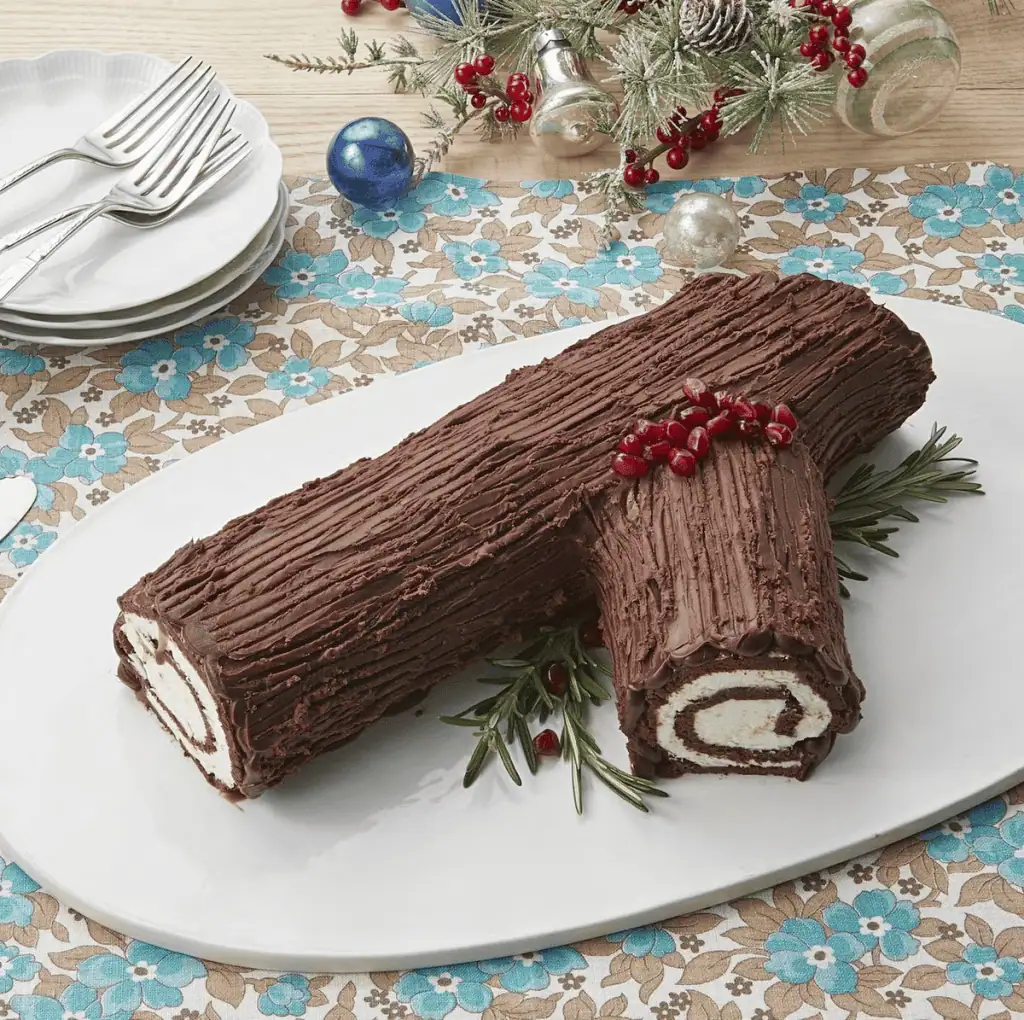
The Yule log cake became a dessert tradition as a symbolic replacement rather than a planned recipe. As actual Yule logs faded from households, bakers created cakes shaped like logs to preserve the ritual visually. The dessert filled a cultural gap more than a culinary one. Over time, the cake stood on its own, no longer requiring explanation. What began as symbolism slowly transformed into an expected holiday sweet.
Chocolate Fudge

Fudge earned its holiday place because it was forgiving and didn’t require an oven. During busy seasons, cooks needed desserts that could be made quickly and shared easily. Fudge fit the bill perfectly. It also traveled well and could be cut into small portions for gifting. Families repeated it year after year because it worked. Over time, its presence became tradition rather than convenience.
Eggnog Desserts

Eggnog-inspired desserts became popular because fresh eggnog was perishable and seasonal. Turning it into cakes, pies, and custards extended its use beyond a single drink. These desserts helped avoid waste and made the flavor last longer. Over time, the taste itself became associated with holidays, regardless of form. What started as a practical solution evolved into a broader dessert tradition, thanks to the addition of eggnog flavor.
Trifle

Trifle became a holiday staple largely because it used leftovers. A stale cake, extra custard, and fruit could be layered into something that looks intentional and festive. The visual appeal hid its practical origins. Families repeated it because it reduced waste and fed crowds. Over time, trifle became associated with celebration rather than thrift. Its accidental origins were forgotten, but the tradition remained.
