
Homemade Samoas Cookies
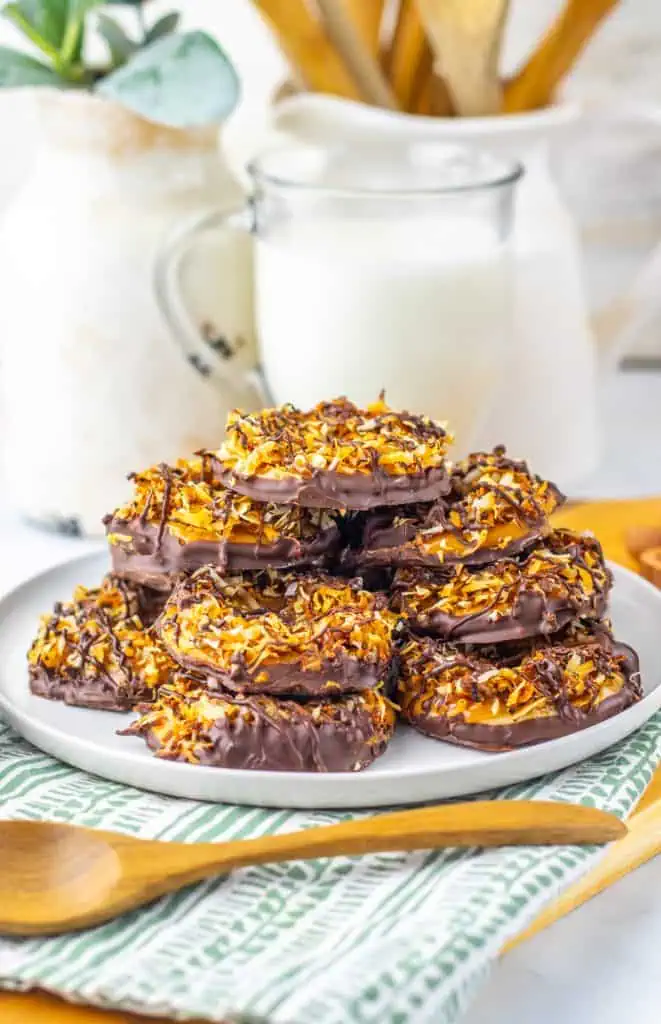
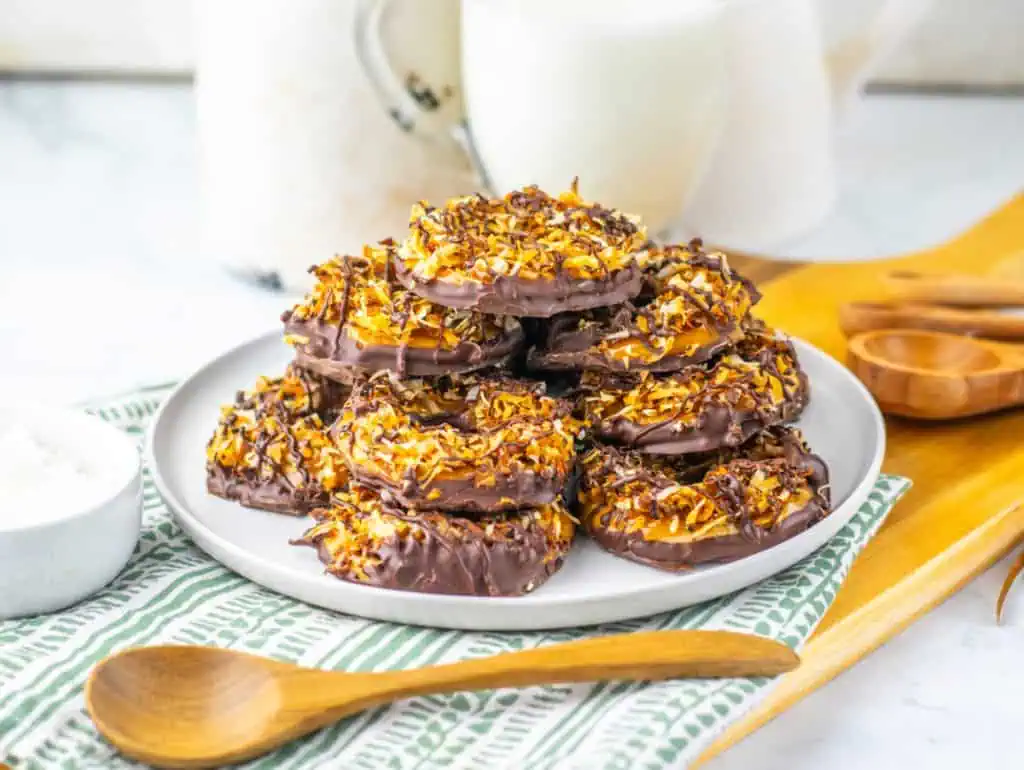
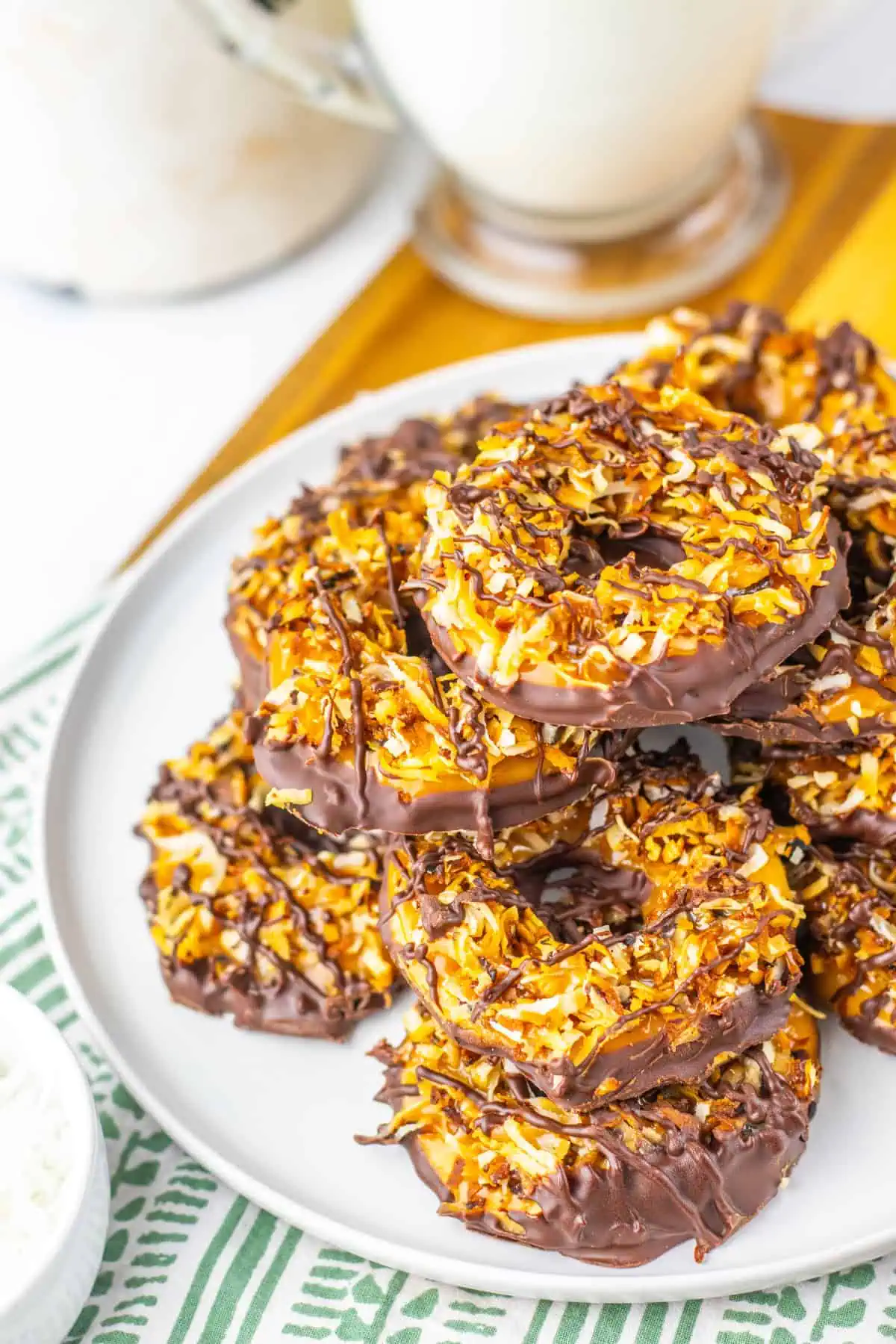
These homemade Samoas cookies are dangerously good. You’ve got buttery shortbread cookies, chewy toasted coconut caramel piled on top, rich dark chocolate on the bottom, and that signature chocolate drizzle that instantly makes them feel bakery worthy. These are one of those cookies where people take one bite and immediately go, “Okay…these might actually be better than the originals.” And we love hearing that!
The crisp buttery cookie underneath the soft caramel coconut topping with that snap of chocolate on the bottom is just ridiculously satisfying. If you’ve ever hidden Girl Scout cookies in the freezer so nobody else touches them, trust me, these homemade Samoas are your kind of recipe. If you already love desserts like my Homemade Oatmeal Cream Pies or fudgy Brownie Balls, these cookies absolutely deserve a spot on your baking list too.

Recipe Snapshot
- Real Ingredients, Real Flavor: Actual butter in the shortbread, real dark chocolate for dipping, and toasted sweetened coconut that has a nutty, caramel depth you don’t get from the packaged version.
- Four Distinct Layers: Crispy shortbread base, gooey caramel, toasted coconut, and a chocolate coat and drizzle – each one contributing its own texture and flavor to every single bite.
- Available Year-Round: You don’t have to wait for Girl Scout cookie season. Make a batch whenever the craving strikes, for any occasion, any time of year.
- Freezer Friendly: Fully assembled cookies freeze beautifully for up to three months. Make a big batch, freeze them, and pull them out whenever you need to impress someone.
- Best For: Cookie exchanges, holiday gift boxes, bake sales, Girl Scout cookie cravings any time of year, potlucks, and anyone who thinks they’ve had a great Samoa and hasn’t yet tried a homemade one.
David’s Tip: Work fast once the caramel is melted. As soon as it starts to cool it thickens and becomes harder to work with. Have all your cookies lined up and ready to go before you start dipping, so you can move quickly through the whole batch while the caramel is still at the right consistency.
Why You’ll Love These Homemade Samoas Cookies
Samoas vs. Caramel deLites: What’s the Difference?
If you’ve ever wondered why the same cookie seems to have two different names depending on where you live, here’s the story. The Girl Scouts of America uses two separate licensed bakeries: Little Brownie Bakers, based in Louisville, Kentucky, and ABC Bakers, based in Richmond, Virginia. The version from Little Brownie Bakers is called Samoas. The version from ABC Bakers is called Caramel deLites.
The two cookies are nearly identical – same concept, same layers, and the same general flavor. But cookie lovers who have tasted both side by side will tell you there are subtle differences: Samoas tend to use darker chocolate and have a generous coconut layer. Caramel deLites have a slightly stronger coconut flavor and are a touch less sweet. Samoas also have a little bit less crunch to them
The homemade version in this recipe leans toward the Samoas side of cookie life – real dark chocolate, plenty of toasted coconut, and a buttery shortbread that’s crisp but not overly crunchy. Whichever version you grew up with, this recipe is going to remind you of both and improve on the original.
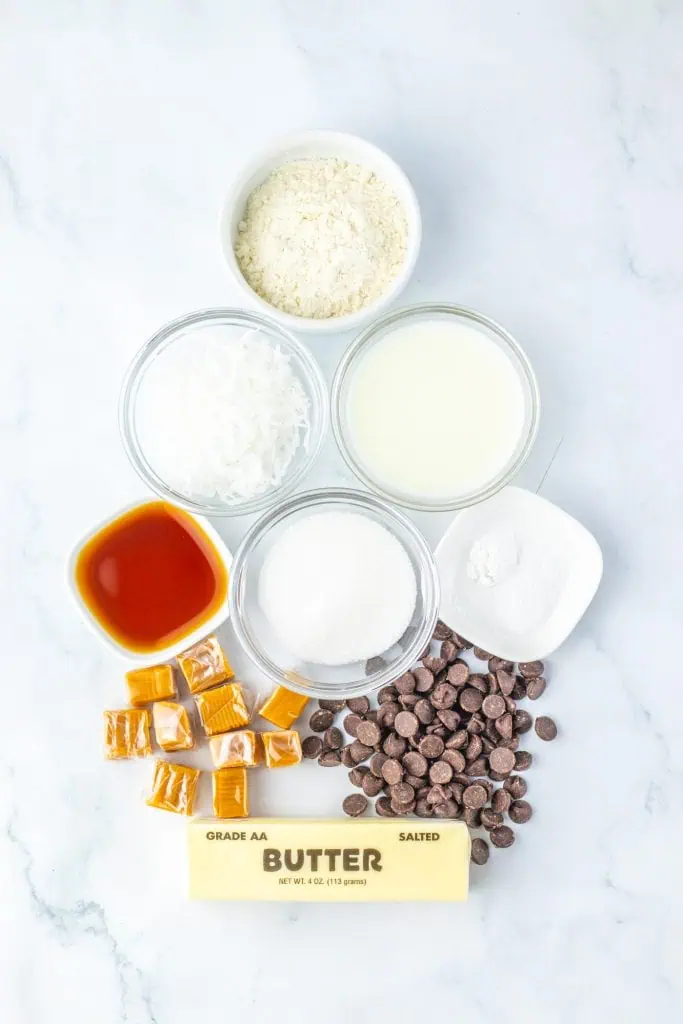
The Ingredient Breakdown
For the Shortbread
For the Coconut Caramel Topping
For the Chocolate
Top Tip for a Smooth Caramel Workflow
When working with melted caramel, your biggest challenge is temperature control. Caramel hardens rapidly as it cools, making it difficult to dip and spread. To save yourself the frustration, keep your caramel pot over the lowest possible heat setting on your stovetop while assembling the cookies. If the mixture starts to pull or get too thick, simply whisk in an extra splash of warm milk to immediately restore that velvety, dip-friendly consistency.
How to Toast Coconut Perfectly (Don’t Skip This)
Toasting the coconut is not a step you can skip or rush. Raw sweetened coconut is chewy, sweet, and very much a “one note” flavor profile. Toasted coconut has a nutty, slightly caramelized flavor that transforms the entire topping of your cookies. Here are 3 ways on how you can do it right.
- Stovetop method (recommended): Add the coconut to a large dry skillet over medium heat. Stir constantly – and I mean constantly – because coconut goes from golden to burnt very quickly, especially around the edges. It takes about 4 to 5 minutes. You’re looking for an even, deep golden brown color throughout. As soon as it looks right, remove it from the heat immediately and transfer to a bowl to stop the cooking.
- Oven method: Spread the coconut in a single layer on a parchment-lined baking sheet and bake at 325°F, stirring every 3 to 4 minutes, until evenly golden. About 10 to 12 minutes total. Slightly more even results but requires constant attention.
- What to watch for: The coconut on the edges will always toast faster than the center. Keep it moving constantly. The moment you smell it getting toasty and see the color going golden brown, it’s ready. Another 60 seconds past that point and it can taste bitter.
How to Make Homemade Samoas Cookies (Step-by-Step)
Step 1: Make and Chill the Shortbread Dough
Preheat the oven to 350°F and line a large baking sheet with parchment paper. In a large bowl, beat the softened butter and sugar together with a hand mixer on medium speed until light, pale, and fluffy – about two to three minutes. Add the baking powder, salt, and flour and mix on low until just combined. Add the milk and vanilla and continue mixing until a smooth dough forms. Divide in half, press each half into a disc shape, wrap in plastic wrap, and refrigerate for 45 minutes. The dough needs to be cold to roll without sticking.

David’s Tip
Flour your rolling pin as well as your surface – a floured surface alone often still results in the dough sticking to the pin and tearing. Even a light dusting on the pin makes rolling go much more smoothly.
Step 2: Roll, Cut, and Bake the Shortbread
Working with one chilled disc at a time on a lightly floured surface, roll the dough to about 1/8 inch thick. Use a round cookie cutter (about 2 inches in diameter) to cut circles, then use a smaller cutter about the size of a quarter – or the cap of a spice jar, or a large straw – to cut a hole in the center of each circle. Place on the prepared baking sheet and bake for 12 to 15 minutes until the edges are just starting to turn light golden. Let them cool completely before assembling. Warm shortbread will dissolve under the caramel.
Step 3: Toast the Coconut
Add the sweetened shredded coconut to a large dry skillet over medium heat. Stir constantly for 4 to 5 minutes until the coconut is an even deep golden brown throughout. Transfer immediately to a bowl and set aside. The coconut will continue to cook slightly from residual heat if you leave it in the pan, so move it quickly.
Step 4: Melt the Caramel and Combine with Coconut
In a medium saucepan over medium-low heat, combine the unwrapped caramels and the milk. Stir constantly until completely melted and smooth – about 5 to 7 minutes. Don’t rush it with high heat or the caramel can scorch. Remove from heat. Add about 1/3 cup of the melted caramel to the toasted coconut and stir to combine – this is your coconut topping mixture. Keep the remaining caramel in the saucepan for dipping.
Step 5: Coat the Cookies with Caramel
Working quickly, use two forks to dip the top of each cooled cookie into the plain melted caramel, letting the excess drip off. Place it caramel-side up on the parchment-lined baking sheet. Immediately press a generous amount of the coconut-caramel mixture all over the top, covering it completely. Repeat for all cookies. If the caramel starts to firm up, place the saucepan back over low heat for 30 seconds to loosen it.
Step 6: Melt the Chocolate and Dip the Bottoms
Add the chopped dark chocolate to a microwave-safe bowl and microwave in 30-second intervals, stirring well after each, until completely melted and smooth. Use two forks to dip the bottom of each cookie into the melted chocolate, letting the excess drip off, then place the cookies chocolate side down on the parchment to set.
Step 7: Add the Chocolate Drizzle and Set
Pour the remaining melted chocolate into a small zip-lock bag and seal it. Snip a tiny corner off one end – smaller than you think you need, about 1/8 inch. Drizzle chocolate in thin lines across the tops of all the coconut-covered cookies. Let the chocolate set completely at room temperature for about 10 minutes, or speed it up in the refrigerator for five minutes.
Storage & Make-Ahead Instructions
Make-Ahead Tip: The shortbread dough can be made up to three days ahead and refrigerated, or frozen for up to three months. Bake the cookies, then finish the assembly on the day you want to serve them for the freshest result.
Room Temperature: Store in an airtight container for up to 3 to 4 days. Layer between sheets of parchment paper so the chocolate bottoms don’t stick together.
Refrigerator: Keeps fresh for up to one week. The shortbread will be slightly firmer cold – let them sit at room temperature for 10 minutes before serving for the best texture.
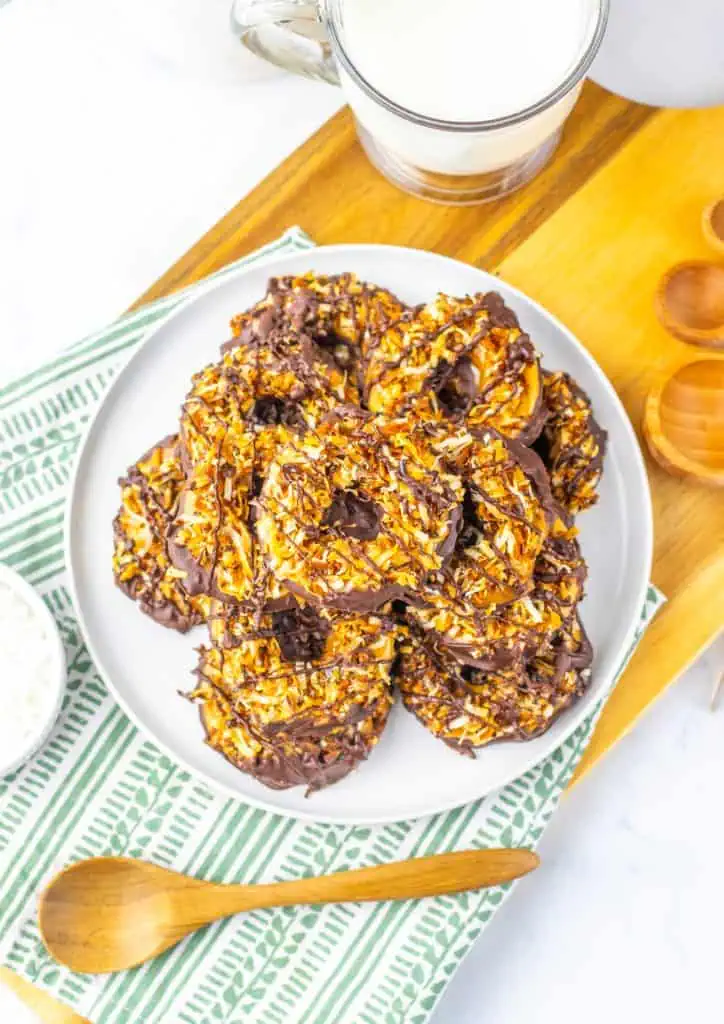
Freezer: These freeze exceptionally well. Arrange fully assembled cookies in a single layer on a parchment-lined baking sheet, freeze until solid (about two hours), then transfer to an airtight container with parchment between layers. Freeze for up to three months. Thaw at room temperature for 20 to 30 minutes.
Ready to Make the Best Cookie You’ve Ever Tasted?
Homemade Samoas take some patience – chilling the dough, toasting the coconut, working with caramel, dipping in chocolate. But every single step builds toward a cookie that is genuinely better than the one you’ve been waiting for every February. Once you’ve had one of these, the original is going to feel like a shadow of what it could be.
Give this recipe a try and let me know how it went in the comments! Did you make the rings or go with the bar shortcut? Did you try them frozen? I want to hear all about it. And if you share a photo on Pinterest, tag FoodnService – I would love to see your beautiful Samoas.
More Delicious Cookies To Make
- Coffee House Cookies
- Peanut Butter Blossom Cookies
- Copycat Chips Ahoy Stranger Things Cookies
- Apple Spiced Cookies

Homemade Samoas Cookies
Ingredients
- 1/2 cup of sugar
- 2 sticks of unsalted butter softened to room temp
- 1/2 tsp salt
- 1/4 baking powder
- 2 cups flour
- 2 tbsp milk
- 1/2 tsp of vanilla extract
- 2 1/2 cups of shredded sweetened coconut
- 4 tbsp milk
- 20 oz of store bought caramels
- 12 oz of dark chocolate
Instructions
- Preheat the oven to 350° and line a large baking sheet with parchment paper and set aside. In a large bowl add the sugar and butter and cream the butter with a hand mixer, until light and fluffy.
- Add the baking soda, salt and flour and beat slowly. Add the milk and vanilla and continue beating until everything combines and a dough forms.
- Take two trays and line with parchment paper. Divide the dough in half and place each half on each tray. Slightly press out into a disc shape and then cover with plastic wrap and place in the refrigerator for 45 minutes.
- Lightly flour a flat clean space. Take one of the chilled doughs and sprinkle more flour on top, roll out the dough with a rolling pin until it’s about 1/8 inch thick. Use a cookie cutter to cut out as many cookies as you can. Place them on the lined baking sheet.
- Use a cookie cutter about the size of a quarter to cut a circle out the middle of each cookie. Remove the middle. Repeat with the other chilled dough. Bake the cookies in the oven for 12-15 minutes, or until a light golden brown color.
- Once they are baked let them cool completely. In a large pan add the shredded coconut and cook on a medium to high heat while stirring constantly until it becomes a dark golden brown color. In a medium pot add the milk and caramels, melt over a medium to low heat while stirring constantly.
- Add about 1/3 of a cup of the melted caramel to the toasted coconut, stir to combine. Take a cooled cookie and dip the top of it in the caramel, use two forks to lightly dip in the caramel and lift back up. Place back down on the baking sheet with the caramel side facing up.
- Take the toasted coconut and press it into the wet caramel on the cookie all around. Repeat until all the cookies are done. In a medium sized microwave safe bowl add the dark chocolate and microwave until melted, stirring every 30 seconds.
- Dip the bottoms of the cookies into the chocolate using the two fork trick and place back on the baking sheet, add the rest of the chocolate into a small zip lock bag and cut a tiny bit of the corner off and drizzle on top of the cookies.
- Let the chocolate harden (about 10 minutes) then serve and enjoy!!
Nutrition
Notes
Pro Tips for Perfect Homemade Samoas
- Cold dough is everything: If your shortbread dough is at room temperature when you try to roll it, it will stick to everything and be nearly impossible to work with cleanly. The 45-minute chill is non-negotiable. If it warms up while you’re cutting, put it back in the fridge for 10 minutes.
- Work fast with the caramel: Once the caramel starts to cool, it thickens quickly. Have all your cookies laid out and ready before you start dipping. If it gets too thick mid-batch, set the pan back on low heat for 30 seconds.
- Use a chocolate bar, not chips: Chocolate chips have stabilizers that prevent them from melting into a truly smooth, glossy consistency. A good dark chocolate bar gives you a cleaner melt and a much better snap and shine when it sets.
- The two-fork technique is essential: One fork to hold and dip, the other to lift and transfer. Once you try it, you’ll use it for every chocolate-dipped cookie you ever make. It gives clean edges and keeps your fingers out of the chocolate.
- Let cookies cool completely before assembly: Even slightly warm shortbread will melt the caramel and make a mess. Wait until the cookies are completely cooled – at least 20 minutes at room temperature after baking.
- Make the shortbread bars for an easier option: If cutting rings feels tedious, press the dough into a parchment-lined pan, bake as a sheet, and cut into rectangles after baking. Top with the coconut-caramel mixture and dip one end in chocolate. Tastes identical, takes half the time.
Tried this recipe?
Let us know how it was!FAQs: Samoas Questions, Answered
What is the difference between Samoas and Caramel deLites?
They’re essentially the same cookie made by two different Girl Scout bakeries. Little Brownie Bakers makes Samoas, ABC Bakers makes Caramel deLites. Depending on which part of the country you’re in, your local Girl Scout troop sells one or the other. Subtle differences: Samoas tend to use darker chocolate with a more generous coconut layer. Caramel deLites are slightly less sweet with a slightly stronger coconut flavor. This homemade recipe leans toward the Samoas side – real dark chocolate and plenty of toasted coconut.
Can I use store-bought caramel sauce instead of melting caramels?
Caramel sauce from a jar is too thin and liquid for this recipe – it won’t hold the coconut in place and will run off the cookie. Stick with soft individually wrapped caramel candies (Werther’s soft caramels are the best option, Kraft caramels work too) melted with a splash of milk. The result is thick, workable, and perfectly behaved.
Can I skip the hole in the middle?
Absolutely. The hole is traditional and gives the cookie its signature donut-ring look, but it’s completely optional. Round cookies without a hole taste identical and are a lot faster to cut. You can also make bars by pressing the dough into a pan and cutting after baking – same flavors, much less fuss.
Why is my caramel hardening too fast?
Caramel cools and thickens quickly, especially in a cooler kitchen. Have all your cookies lined up before you start dipping. If the caramel starts to stiffen mid-batch, set the saucepan back over low heat for 30 seconds and stir to loosen it. Working in a slightly warmer area of your kitchen also helps slow the cooling.
Can I use chocolate chips instead of a chocolate bar?
You can, but the result won’t be as good. Chocolate chips contain stabilizers that prevent them from melting into a truly smooth, glossy consistency. A dark chocolate bar melts cleanly, gives you a glossy finish, and snaps satisfyingly when you bite into it. It’s worth using the real thing here.
Can I make these ahead of time?
Yes. The shortbread dough can be made up to three days ahead and refrigerated. The baked cookies (without assembly) keep at room temperature in an airtight container for two to three days. Fully assembled cookies are best within four days at room temperature or within a week in the fridge. For longer storage, freeze the fully assembled cookies for up to three months.
My coconut is burning – what am I doing wrong?
Sweetened coconut has a lot of sugar, which means it burns faster than you’d expect. The most common mistake is medium-high heat and not stirring constantly. Use medium heat and keep the coconut moving every few seconds – don’t walk away. The moment it starts to turn golden, reduce the heat slightly. It goes from perfectly toasted to scorched in under a minute.
