
These 5 “Polite Dining” Rules from the 1950s Would Spark Debate Today
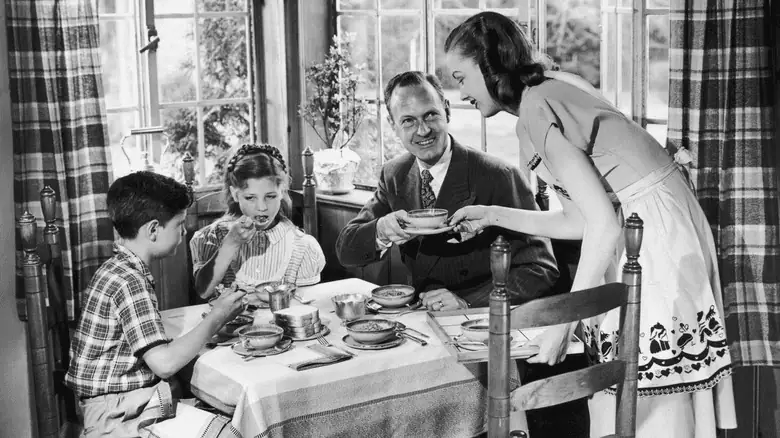
Dining in 1950s America was a highly choreographed social ritual where every movement at the table signaled one’s status and upbringing. According to archived etiquette guides and vintage domestic magazines, “polite dining” was less about the food and more about maintaining a rigid social hierarchy.
While modern 2026 dining focuses on comfort and equality, mid-century rules were built on a foundation of strict gender roles and formal deference. We have identified five specific table manners from the 1950s that would almost certainly spark a heated debate in today’s more casual and egalitarian world.
The Man Always Orders for the Woman
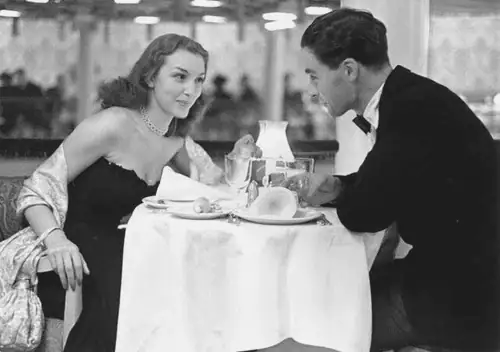
In the 1950s, it was considered a factual breach of etiquette for a woman to speak directly to a waiter if she was dining with a man. According to a 1950s issue of Woman’s Own, the man was the “official spokesperson” for the table, taking charge of all ordering and interactions with staff.
He would consult his date on her preferences beforehand, but the final verbal request was strictly his responsibility to maintain a sense of protective chivalry. Today, this rule would be seen as a significant loss of agency, but in the mid-century, it was marketed as a way for a lady to remain “above the fray.”
The Host Must Carve the Meat
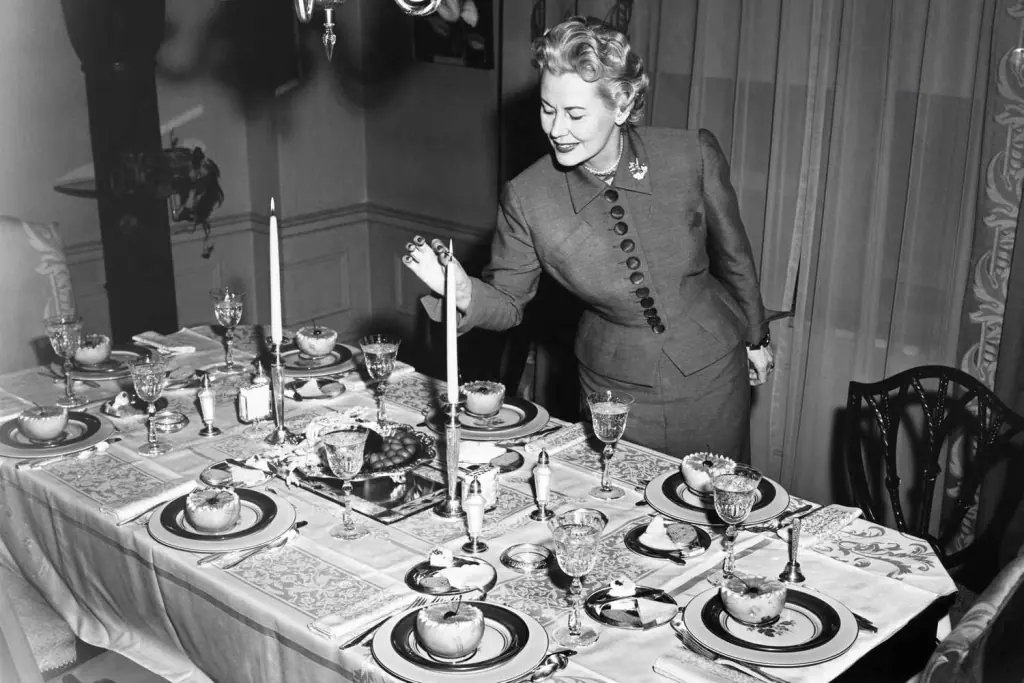
The 1950s dinner party was defined by the “host-as-provider” ritual, where the man of the house was solely responsible for carving the roast at the table. According to historical domestic records, if no male host was present, the hostess was expected to ask a “gentleman guest” to perform the task rather than doing it herself.
This rule reinforced the idea that high-effort “muscle work” was a masculine duty, even within the domestic sphere. Modern hosts, who often prefer pre-sliced platters or buffet-style service to maximize social time, would find this mandatory performance both archaic and unnecessary.
Standing When a Woman Leaves the Table
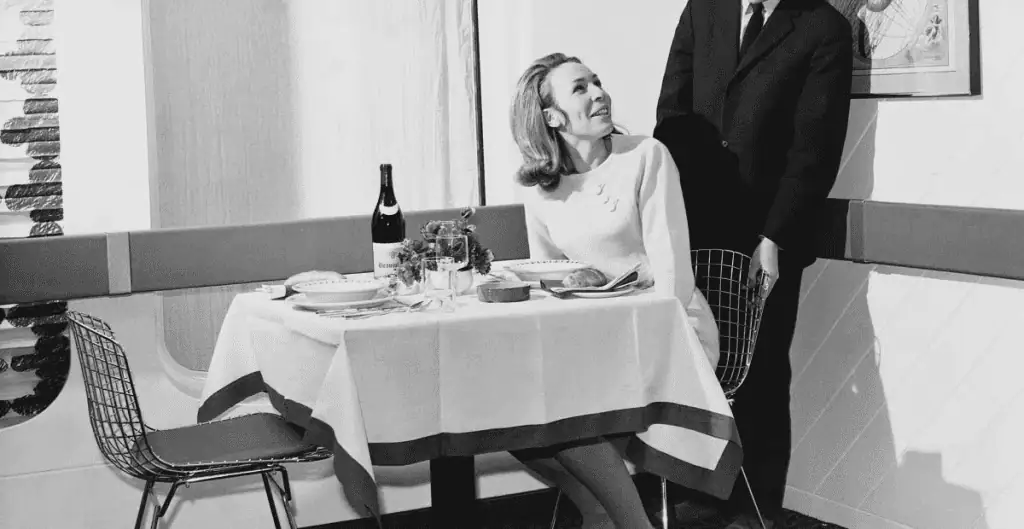
One of the most visible 1950s rituals was the requirement for every man at the table to stand whenever a woman rose to leave or returned to her seat. According to mid-century etiquette handbooks, this “gesture of respect” was mandatory in both home and restaurant settings to show the man’s attentiveness.
While some still view this as a charming act of old-school gallantry, many 2026 diners would find the constant jumping up and down to be disruptive to conversation. Today, this practice is often debated as a performative relic that creates an awkward imbalance in social momentum.
Light Conversation Only (No “Heavy” Topics)
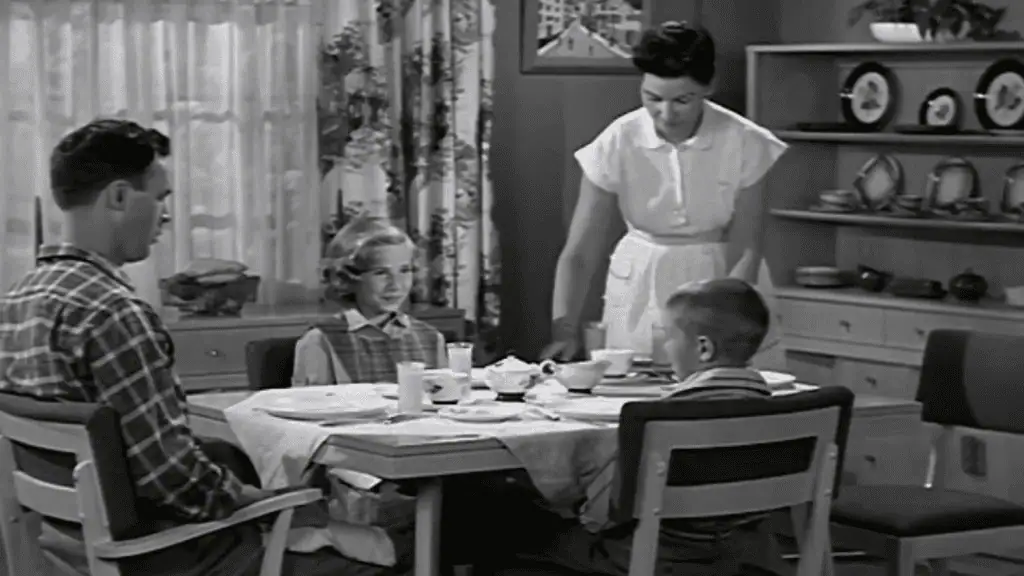
In the 1950s, “polite dining” strictly forbade any discussion of “heavy” or abstract topics like politics, religion, or intense personal opinions. According to 1954 social guides, complex or heated debate was thought to “impair digestion” and ruin the harmonious atmosphere the hostess had worked to create.
The goal was to keep talk “light and gay,” focusing on hobbies, travel, or pleasant community news. Today’s dinner parties are often the primary venue for deep philosophical and political discourse, making the “light talk” mandate feel restrictive and superficial to modern guests.
Women Must Wait for Their Curfew
Even for adult women, 1950s dining etiquette often included a “reputational curfew” that dictated when the evening must end. According to 1950s social norms, a lady was expected to be home by 10:00 PM or 11:00 PM to protect her standing in the community from neighborhood gossip.
Staying out “too late” with a man was a factual risk to her social status, often necessitating the presence of a chaperone for younger diners. In 2026, the idea of a socially-enforced curfew for independent adults is entirely obsolete, marking one of the most drastic shifts in how we view evening autonomy.
