
Easy Cacio e Pepe
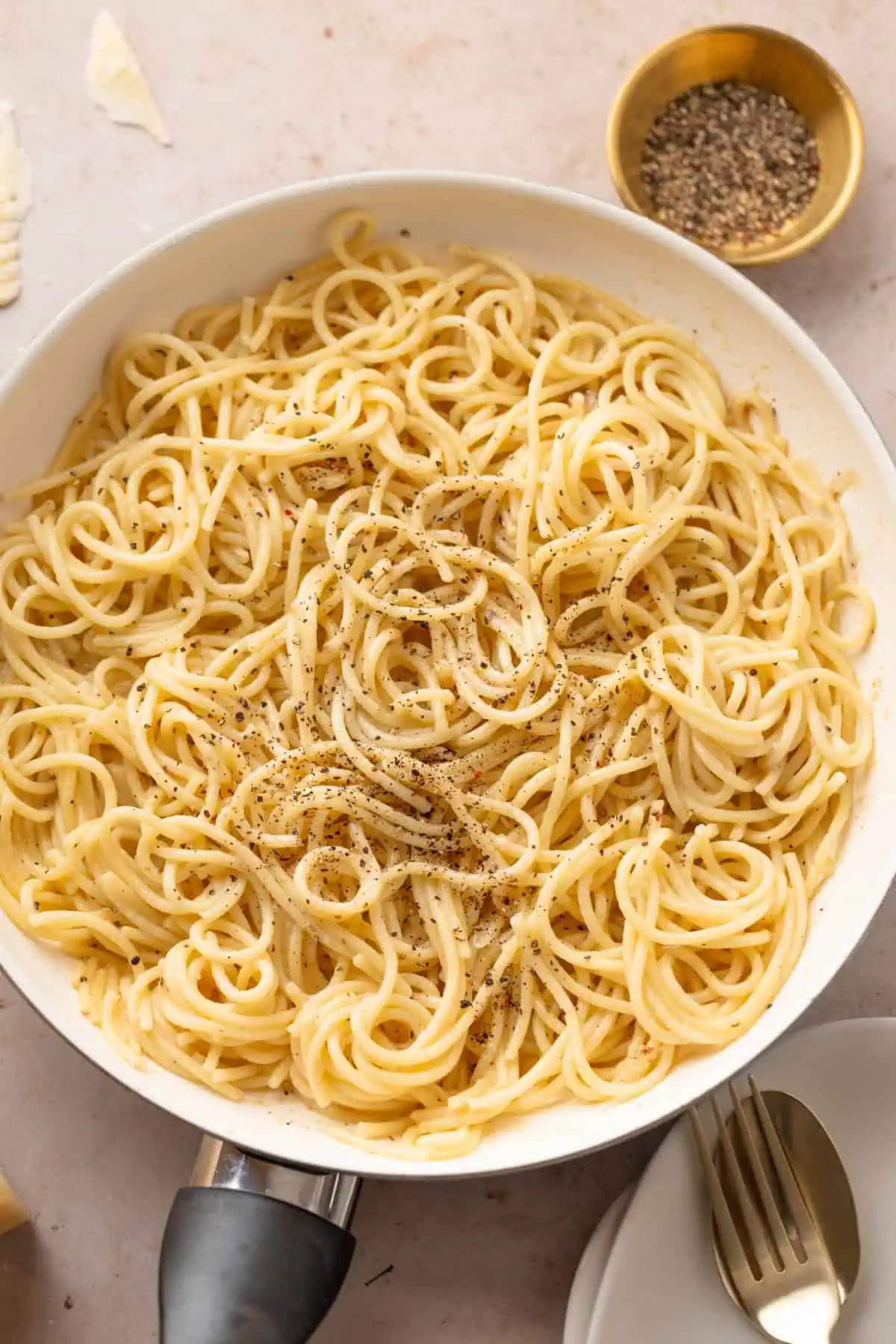
Cacio e Pepe is proof that a comforting pasta dinner does not need a long list of ingredients. Hot spaghetti is tossed with freshly grated Parmesan, toasted black pepper, butter, and starchy pasta water to create a creamy sauce without using any heavy cream. I love it when a recipe isn’t complicated. This pasta recipe is simple and delicious!
This easy version comes together in about 25 minutes, making it perfect for busy evenings or those nights when the pantry looks a little bare. Serve it on its own for a simple meal or pair it with garlic bread, roasted vegetables, or a fresh salad.
About This Recipe
Cacio e Pepe translates to “cheese and pepper,” which perfectly describes the heart of this classic Roman pasta dish. Traditional versions are usually made with Pecorino Romano, black pepper, pasta, and pasta water. This recipe uses Parmesan and butter for a milder, richer variation that is especially approachable for home cooks. The key is combining the ingredients gently so the cheese melts into the pasta water instead of turning stringy or clumpy.

Recipe Snapshot
Prep Time: 5 minutes
Cook Time: 20 minutes
Total Time: 25 minutes
Servings: 3 main dish servings or 4 side servings
Difficulty: Easy
Perfect For: Quick dinners, meatless meals, date nights, and simple comfort-food cravings
Main Ingredients: Spaghetti, Parmesan cheese, butter, and black pepper
Why You’ll Love This Recipe
This is also a useful recipe to keep in your back pocket when you need dinner but have not planned ahead. Most of the ingredients are easy to keep stocked, and the dish feels far more special than the short ingredient list suggests.
Why This Recipe Works
Cooking the pasta until just al dente gives it enough structure to withstand the final tossing without becoming soft or mushy. Reserving the cooking water before draining is essential because the starch released by the pasta helps bind the butter and cheese into a sauce.
Toasting the black pepper briefly in melted butter brings out its aroma and gives the pasta a deeper peppery flavor. The butter also coats the noodles and helps create a rich base for the cheese sauce. Finely grated Parmesan melts more evenly than thick shreds. Adding it gradually with the heat turned very low or completely off prevents it from seizing and forming clumps.
The final toss brings everything together. Adding the reserved pasta water a little at a time allows you to control the sauce until it is smooth, glossy, and creamy enough to cling to every strand.
The Ingredient Breakdown
Top Tip for a “Fabulous” Finish
Grate your cheese yourself from a block, and grate it fine. I tried the pre-shredded bagged parmesan once to save a couple minutes, and it never melted smooth. The anti-caking coating on pre-shredded cheese fights the exact thing you’re trying to do here.
Step 1: Cook the Pasta and Save the Water
Cook the pasta in salted water according to the package instructions, until al dente. Before you drain it, reserve 1 to 2 cups of the pasta cooking water. This cloudy, starchy water is the base of your sauce, so don’t pour it all down the drain.
Step 2: Toast the Pepper
In a skillet over medium heat, melt 2 tablespoons of the butter. Add the black pepper and cook for about 1 minute, just until it smells fragrant and aromatic. That quick toast is what gives cacio e pepe its bold, peppery backbone.
Step 3: Build the Sauce
Pour 1/2 cup of the reserved pasta water into the skillet, then add the drained pasta and the last tablespoon of butter. Lower the heat, sprinkle in the cheese a little at a time, and toss constantly. Keep tossing until the cheese melts into a smooth, silky sauce that coats every strand. Add more pasta water a splash at a time if it looks tight or grainy.
Step 4: Serve Right Away
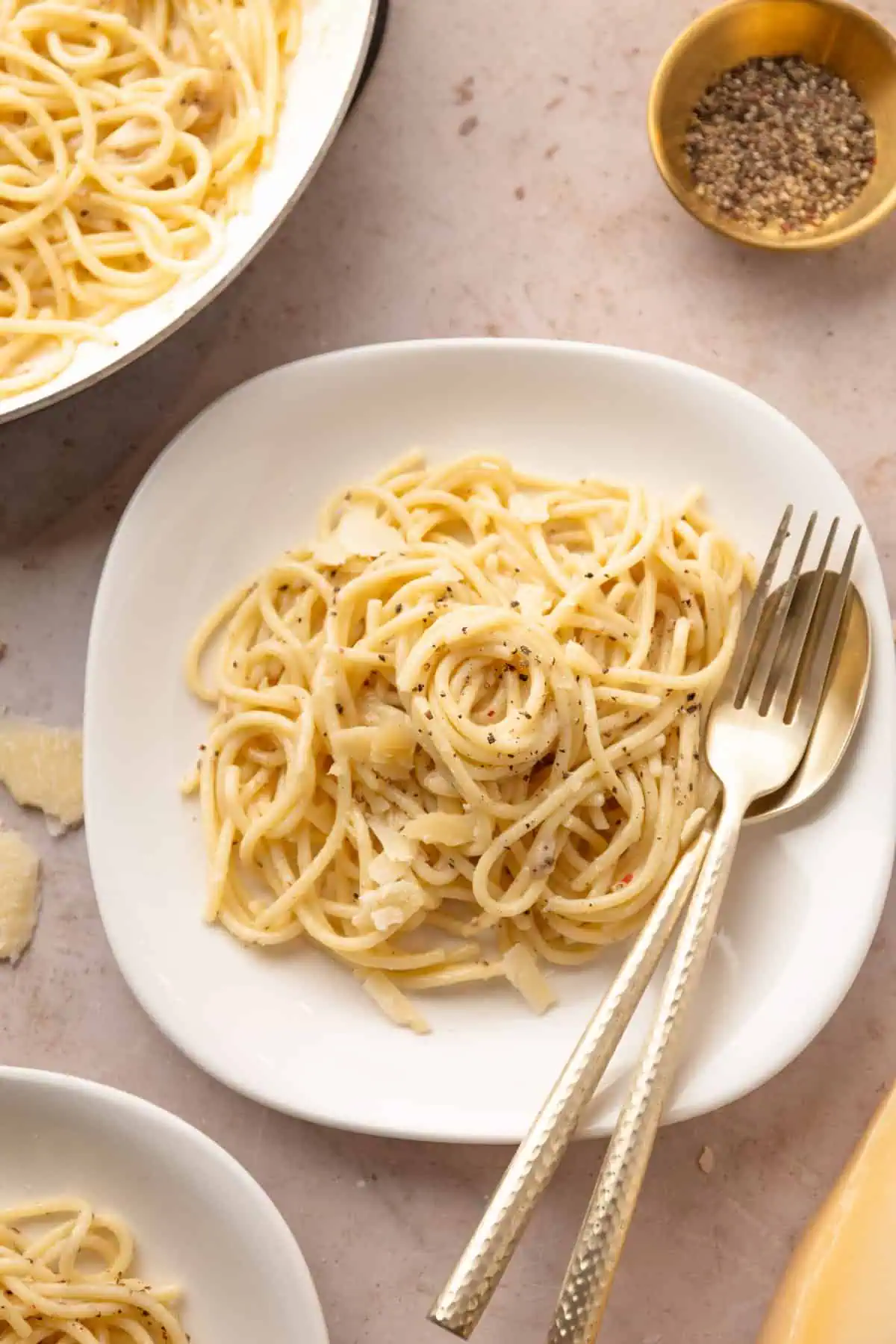
Plate it immediately while the sauce is still creamy and velvety. Finish with an extra crack of black pepper on top. Cacio e pepe waits for no one, so have your bowls ready before you start tossing.
How to Get a Silky Sauce Instead of Clumps
This is the part that intimidates people, but it comes down to two things: temperature and starch. Get those right and the dish is genuinely easy.
The first few times I made this, my cheese seized into grainy clumps every single time. What finally fixed it was pulling the pan off the burner and letting it cool for a few seconds before the cheese went in. Cheese proteins tighten and separate when they hit too much heat, so you want the pan warm, not blazing.
The second key is the pasta water. I used to pour it all down the drain, but now I treat that starchy water like the sauce base, because that’s exactly what it is. The starch is what pulls the fat and cheese into a smooth emulsion. Add it gradually, a splash at a time, and keep tossing. If your sauce ever looks broken or grainy, a little more warm pasta water and steady tossing will usually bring it back together.
Storage and Reheating Instructions
Room Temperature: Do not leave the cooked pasta at room temperature for longer than 2 hours.
Refrigerator: Store leftovers in an airtight container in the refrigerator for up to 3 days. The sauce will thicken considerably once chilled.
Freezer: Freezing is not recommended because the cheese sauce may separate and become grainy when thawed.
Reheat: Place the pasta in a skillet with a splash of water. Warm it over low heat while tossing gently until the sauce loosens and the pasta is heated through. You can also microwave individual portions in short intervals. Add a teaspoon or two of water, cover loosely, and stir between each interval.
More Pasta Recipes You’ll Love
If you love this easy Cacio e Pepe, here are a few more comforting pasta dinners to try next:
- Butternut Squash Alfredo pairs fettuccine with a creamy butternut squash sauce for a cozy pasta dinner, especially during the fall.
- Easy Pasta Carbonara is another classic pasta dish with a rich, cheesy sauce and plenty of comforting flavor.
- Creamy Burrata Pasta combines tender pasta, blistered tomatoes, fresh basil, and creamy burrata for an easy dinner that feels extra special.
- Slow Cooker Cajun Chicken Pasta is creamy, slightly spicy, and perfect when you want the slow cooker to handle most of the work.
Ready to Make This 20-Minute Classic?
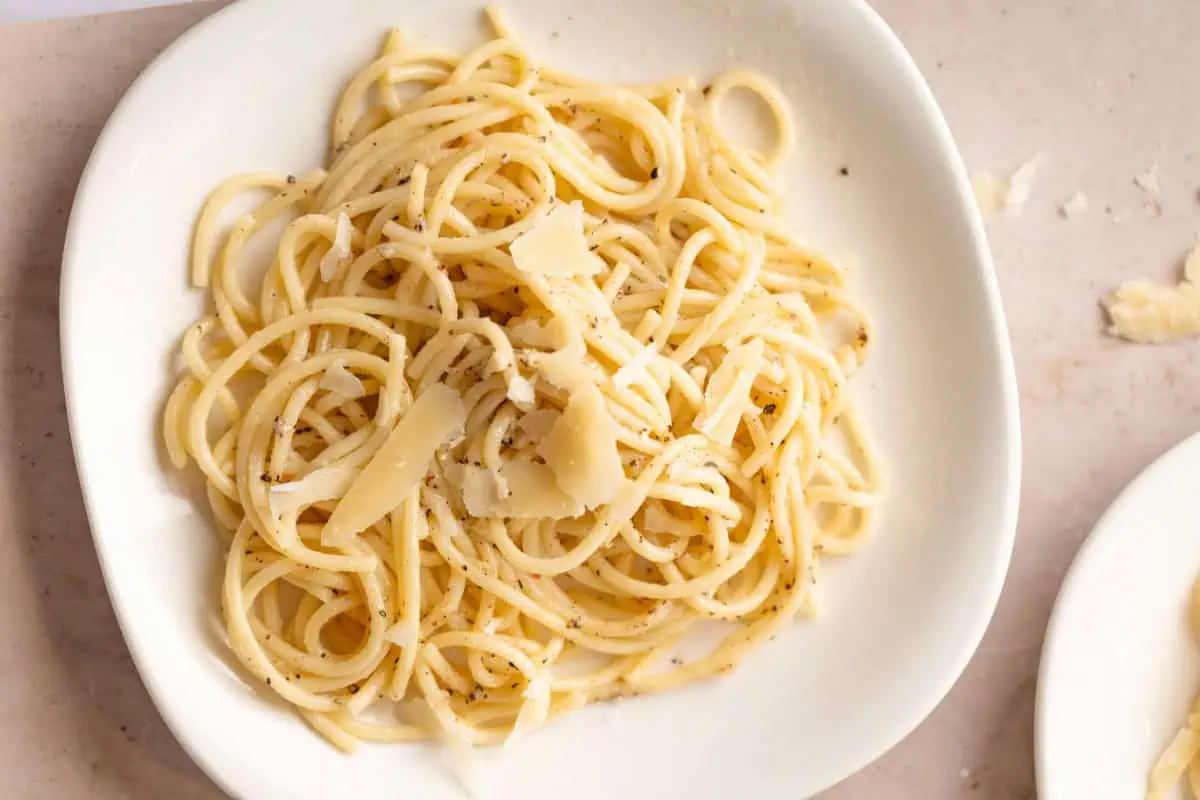
Cacio e pepe proves that a handful of good ingredients and a little technique can beat almost anything you’d order out. Once you get the feel for keeping the heat low and letting the pasta water work, it becomes one of the easiest, most satisfying dinners in your rotation.
If you make it, I’d love to hear how it turned out. Leave a comment and a star rating below, and let me know whether you went with parmesan, pecorino, or a mix of both.

Easy Cacio e Pepe
Ingredients
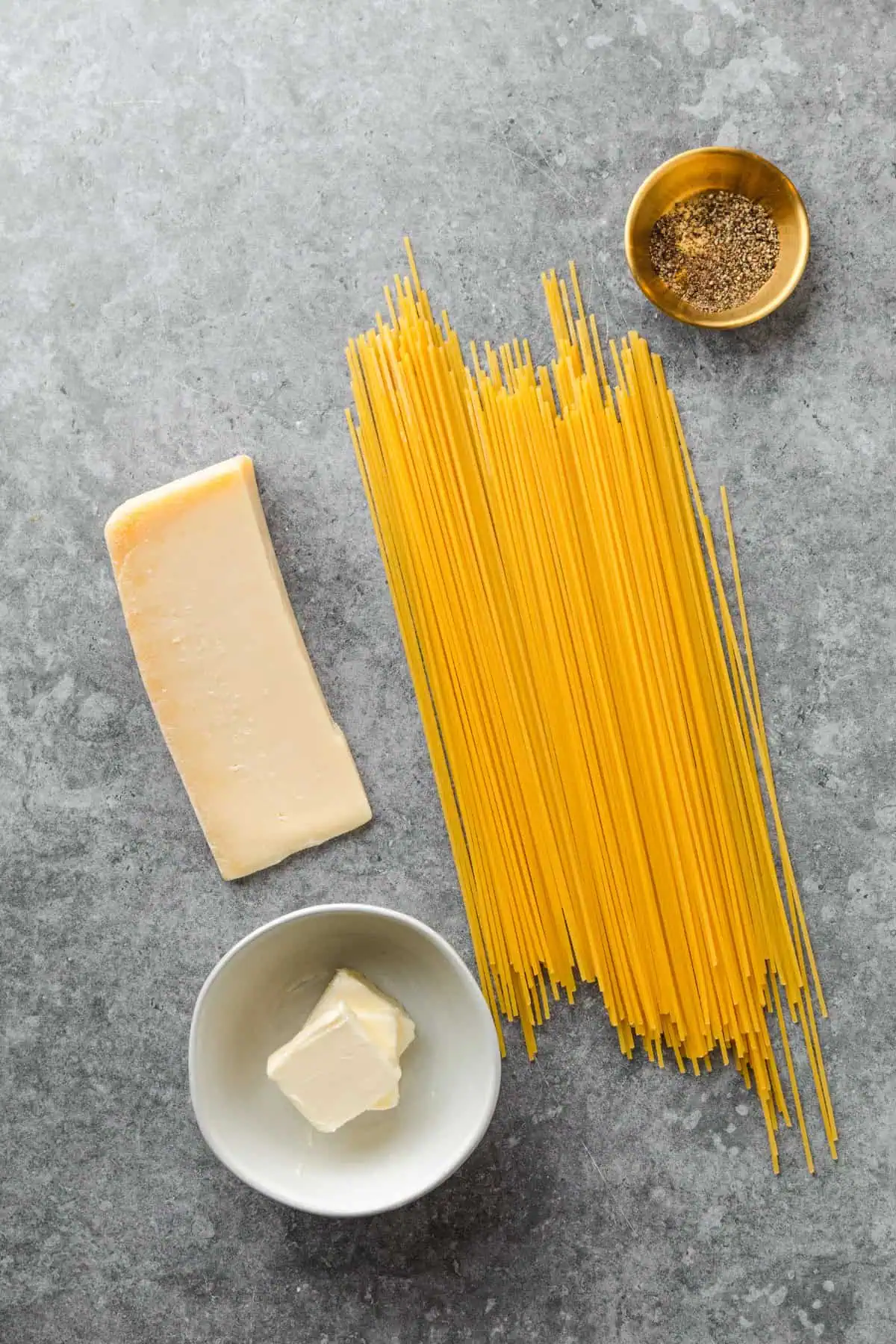
- 6 ounces spaghetti linguine, or fettuccine
- 3 tablespoons unsalted butter divided
- 1 cup freshly grated Parmesan cheese
- 1 teaspoon freshly ground black pepper
- 1 to 2 cups reserved pasta cooking water as needed
Instructions
- Cook the pasta according to the package directions until al dente. Before draining, reserve 1 to 2 cups of the pasta cooking water.
- Melt 2 tablespoons of butter in a large skillet over medium heat.
- Add the black pepper and cook for about 1 minute, stirring frequently, until fragrant.
- Pour ½ cup of the reserved pasta water into the skillet. Add the drained pasta and the remaining tablespoon of butter. Toss to coat.
- Reduce the heat to its lowest setting or remove the skillet from the heat. Add the Parmesan gradually, tossing continuously until it melts into the sauce.
- Add more reserved pasta water, 1 or 2 tablespoons at a time, until the sauce is smooth, glossy, and creamy.
- Serve immediately with additional Parmesan and black pepper, if desired.
Nutrition
Notes
Pro Tips for the Best Cacio e Pepe
- Warm your bowls: A cold plate cools the sauce fast and tightens it. Run your bowls under hot water and dry them before plating.
- Go easy on the salt if using pecorino: Pecorino Romano is intensely salty, so salt the pasta water lightly if you switch to it.
- Toss, don’t stir: A constant tossing motion coats the strands and helps the sauce emulsify better than gentle stirring.
Tried this recipe?
Let us know how it was!Your Cacio e Pepe Questions, Answered
Why did my cacio e pepe sauce clump?
The most common cause is heat. When cheese hits a pan that’s too hot, its proteins seize and form clumps instead of melting smoothly. Keep the heat low when you add the cheese, toss constantly, and use plenty of starchy pasta water to keep the sauce silky.
Can I use parmesan instead of pecorino?
Yes, and this recipe is built around parmesan on purpose. It’s milder and actually a little more forgiving to melt than pecorino. Traditional cacio e pepe uses Pecorino Romano for its sharper, saltier bite, so use that (or a 50/50 mix) if you want the classic flavor.
Do I have to use butter?
No. Butter isn’t traditional, but it helps the sauce emulsify and stay smooth, which is great if you’re new to the dish. For the purist version, skip the butter and use more starchy pasta water to create the silky texture.
Why is pasta water so important?
The starch in pasta water is what binds the cheese and fat into a creamy, cohesive sauce. Without it, the cheese won’t emulsify and you’ll end up with a greasy or grainy result. Cook your pasta in less water than usual to make it extra starchy.
What pasta shape is best?
A long shape like spaghetti, linguine, or fettuccine is traditional and works best. Long strands are easy to toss and give the sauce plenty of surface to cling to. Bucatini is another great choice if you can find it.
Can I make cacio e pepe ahead of time?
Not really. This is a dish that’s best made and eaten right away, since the sauce firms up as it cools. You can grate the cheese and reserve the pasta water in advance, but save the final tossing for right before you serve.
How do I fix a sauce that already broke?
Pull the pan off the heat and add a splash of warm pasta water, then toss vigorously to bring it back together. Working off the heat lowers the temperature so the cheese can relax back into a smooth sauce. A little patience usually saves it.
