
Homemade Pesto
This homemade pesto takes 5 minutes, six ingredients, and one food processor, and it runs circles around anything in a jar at the store. Fresh basil, garlic, pine nuts, parmesan, good olive oil, and a pinch of salt. That’s the whole list, and that’s the whole point.
Pesto might be the hardest-working thing in my refrigerator! Once you taste homemade pesto, it’s hard to go back to the store-bought version. The fresh basil shines, the Parmesan adds rich, savory flavor, and the pine nuts create a silky texture that’s perfect for spreading, dipping, or tossing with your favorite recipes. Best of all, this easy basil pesto comes together in a food processor with just a handful of simple ingredients.
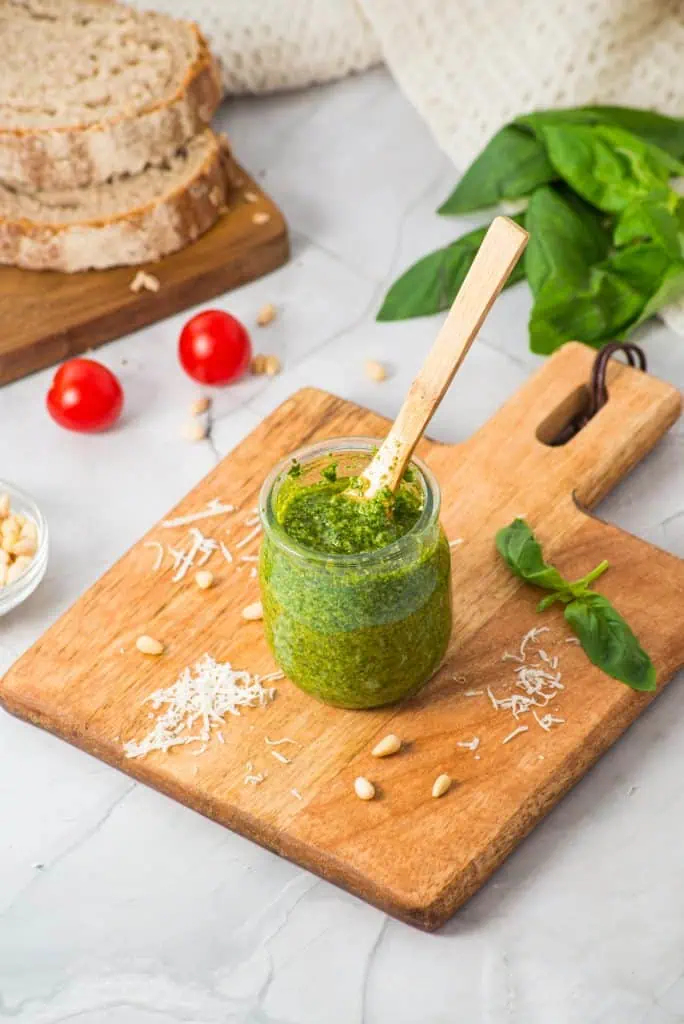
About This Recipe
This is a classic homemade basil pesto made with 2 cups of fresh basil, 1 garlic clove, 1/3 cup olive oil, 1/4 cup parmesan, 1/4 cup pine nuts, and a pinch of salt. It takes 5 minutes in a food processor and makes about 1 cup, enough to sauce a pound of pasta. The basil must be completely dry before blending, and short pulses keep the color bright. Store it in a glass jar topped with a thin layer of olive oil.

Recipe Snapshot
Prep Time: 5 minutes
Cook Time: None
Total Time: 5 minutes
Servings: About 1 cup
Difficulty: Easy
Perfect For: Pasta, sandwiches, pizza, vegetables, marinades, meal prep
Main Ingredients: Fresh basil, Parmesan cheese, pine nuts, garlic, olive oil
SUMMARIZE AND SAVE THIS RECIPE CONTENT ON:
Why You’ll Love This Recipe
Why This Recipe Works
Great pesto is all about balance. Fresh basil provides the signature bright, herbaceous flavor, while Parmesan adds savory richness and pine nuts contribute a naturally buttery texture. Garlic brings just enough punch without overpowering the fresh herbs, and high-quality olive oil ties everything together into a smooth, spoonable sauce.
One of the biggest mistakes people make is blending pesto until it’s completely smooth. Leaving a little texture gives homemade pesto its rustic character while allowing each ingredient to shine through. The result is a sauce that’s fresh, flavorful, and far more interesting than anything you’ll find in a jar.
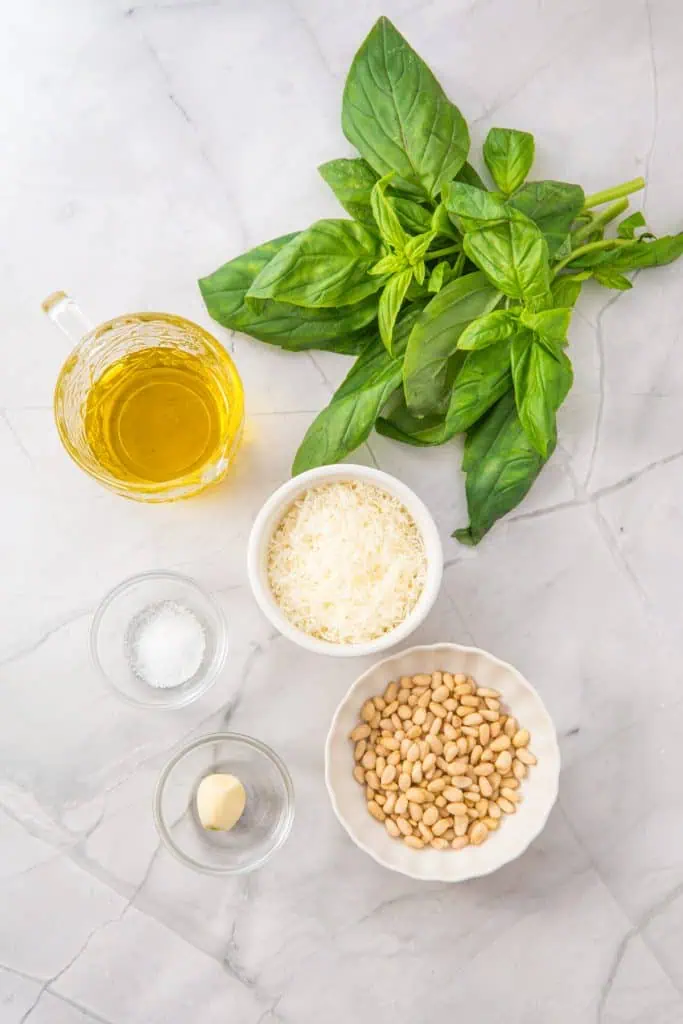
The Ingredient Breakdown
Top Tip for a “Fabulous” Finish
Dry basil is the whole ballgame. Water clinging to the leaves thins the pesto, dulls the color, and speeds up browning in the fridge. Wash your basil an hour ahead, spin it dry, then spread the leaves on a kitchen towel until not a single droplet remains. The difference in the final jar is night and day.
How to Make Homemade Pesto
Step 1: Prep the Basil
Pull the basil leaves from their stems until you have 2 loosely packed cups. Give them a rinse if they need it, then dry them completely with a salad spinner and a towel. The leaves should feel dry to the touch with no water beading anywhere. Smell your hands after handling them. That sweet, peppery perfume is exactly what’s about to go in the jar.
Step 2: Load the Food Processor
Place the basil leaves in a small food processor, then add the garlic clove, olive oil, pinch of salt, grated parmesan, and pine nuts. Everything goes in together, no layering ceremony required. A small processor matters here, since a big bowl with a small batch leaves the blade spinning over half the ingredients.
Step 3: Blend in Short Bursts
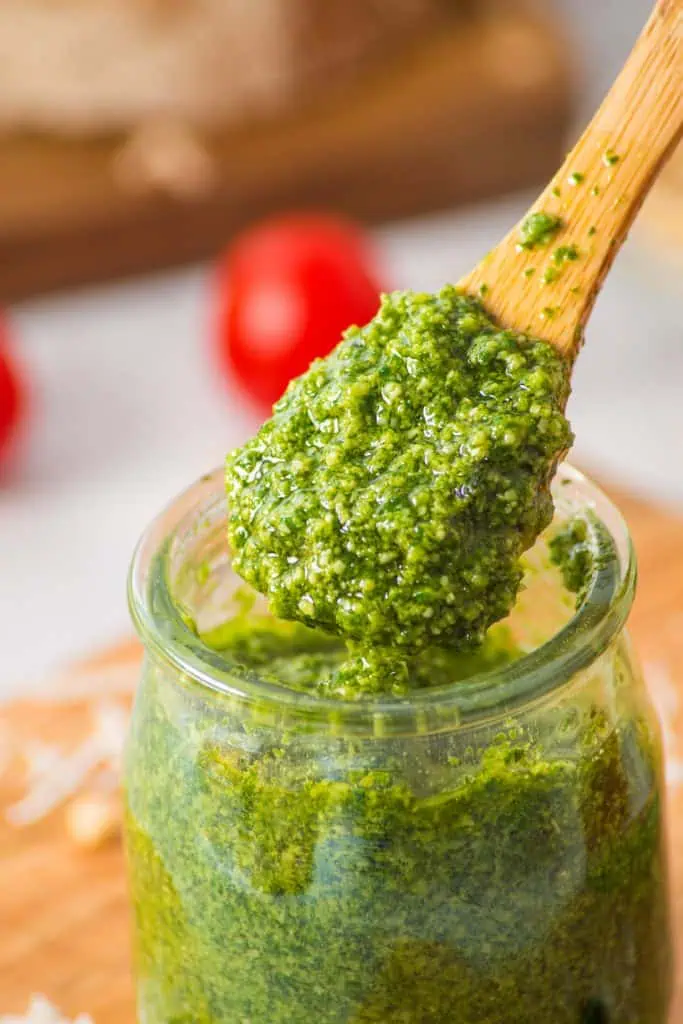
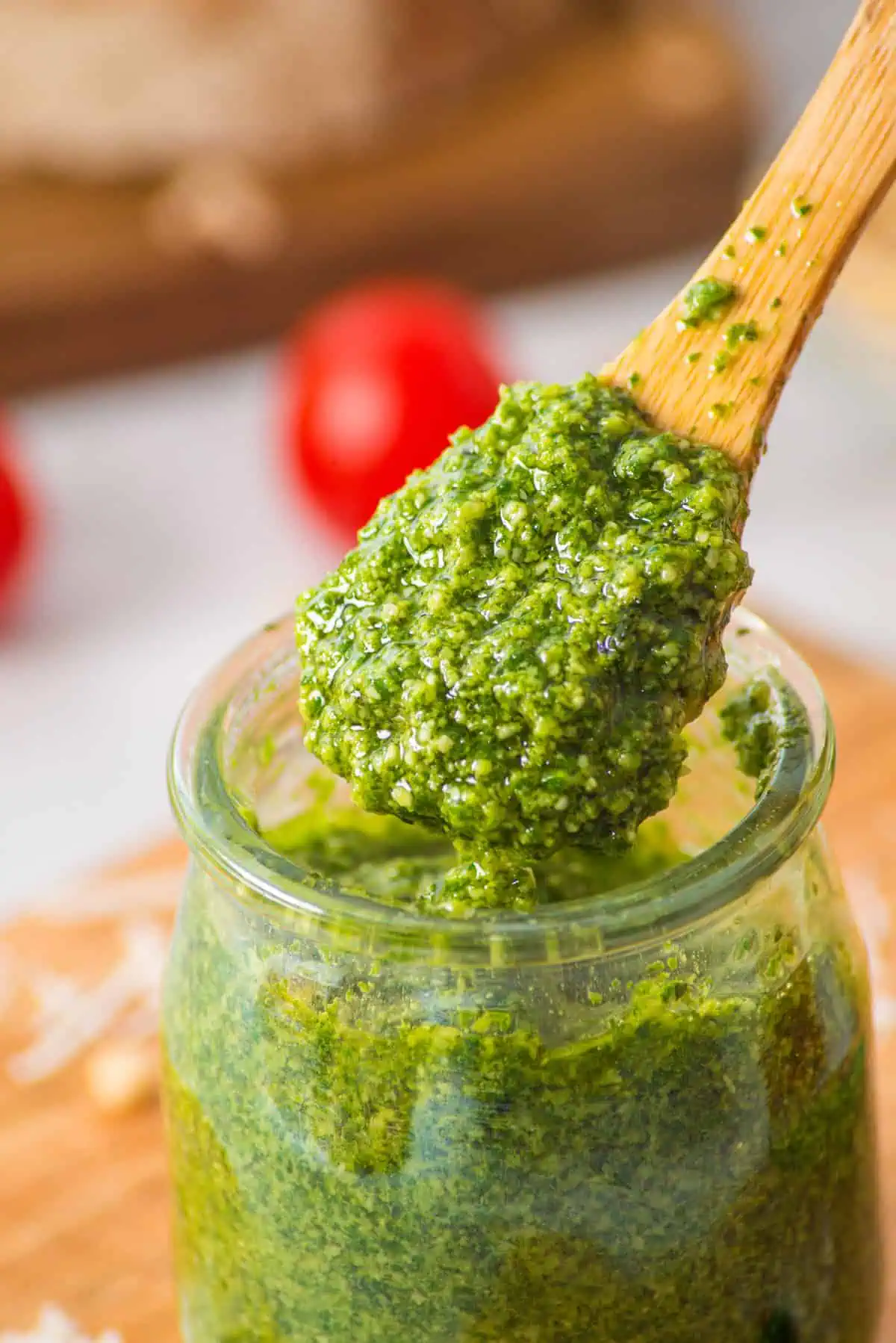
Pulse for a few seconds at a time until the pesto is mostly smooth with a little texture left, stopping to scrape down the sides once. You’re looking for a thick, spoonable sauce that’s flecked and vibrant, and it should smell like pure summer. Taste it and adjust, adding a splash more oil for a looser pesto or another pinch of salt if it needs a lift.
Step 4: Jar It and Chill
Transfer the pesto to a clean glass jar, smooth the surface flat, and pour a thin layer of olive oil over the top. Seal it tightly and store it in the refrigerator. That first spoonful over anything, even just toasted bread, is your reward for 5 whole minutes of work.
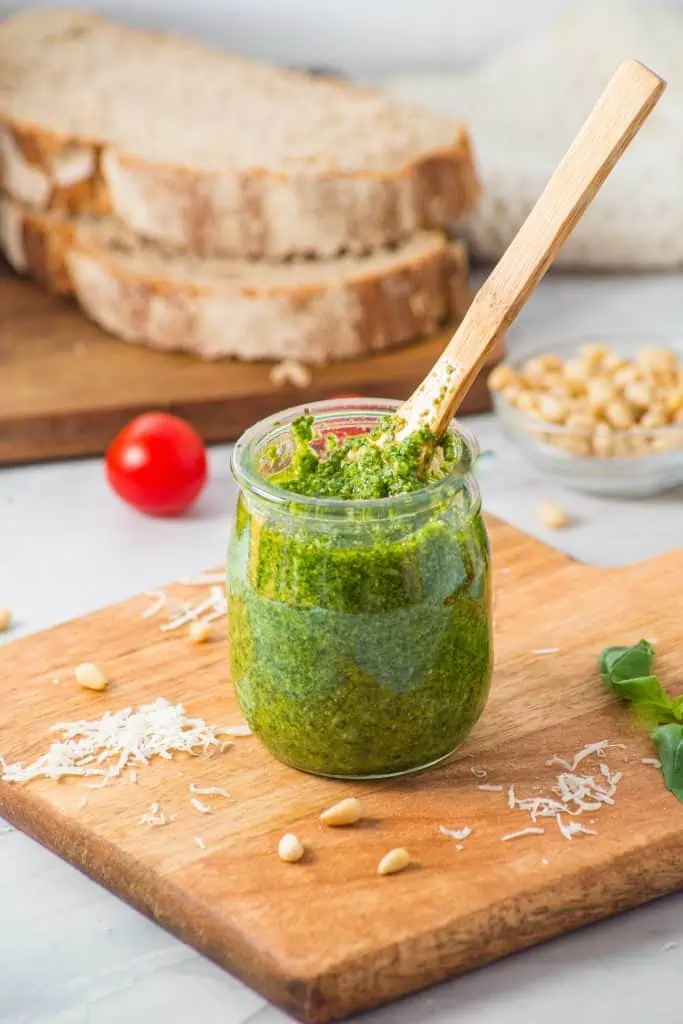

David’s Tip
Pulse, never run. A processor left running builds friction heat, and heat is basil’s enemy twice over: it dulls that bright green color and it can turn the olive oil bitter as the blade breaks it down. Short bursts keep everything cool and the flavor clean. Same rule when serving: pesto never touches a hot pan. Toss it with pasta off the heat and let the pasta’s warmth do the work.
Fun Variations (Make It Your Own)
Swap the nuts: Walnuts, almonds, or cashews all step in for pine nuts, usually for less money. My grilled vegetable sandwich (foodnservice.com/grilled-vegetable-sandwich/) runs on a walnut version and it’s got serious backbone.
Brighten it with lemon: A teaspoon of fresh lemon juice adds a citrus lift and helps slow the browning. Not traditional, entirely delicious.
Bring some heat: A pinch of red pepper flakes blended in gives the pesto a slow warmth that’s fantastic on pizza and grilled chicken.
Make it vegan: Swap the parmesan for 2 to 3 tablespoons of nutritional yeast. You keep the savory depth and lose none of the herby brightness.
Stretch the greens: Replace up to half the basil with baby spinach or arugula. Spinach mellows and stretches an expensive basil haul, while arugula adds a peppery kick.
Storage & Make-Ahead
Room temperature: Two hours maximum, no exceptions. Raw garlic sitting in oil is not a leave-it-on-the-counter situation, so pesto goes from processor to fridge without a detour.
Refrigerator: In a tightly sealed glass jar with that olive oil layer on top, homemade pesto keeps 3 to 4 days. Re-smooth the surface and add a fresh film of oil after every use, and always scoop with a clean spoon.
Freezer: This is where pesto shines. Freeze it in ice cube trays, pop the frozen cubes into a freezer bag, and they keep beautifully for up to 3 months. One cube is a single serving of instant sauce, dropped straight into hot pasta, soup, or a warm pan of vegetables.
Make-ahead: Pesto is the make-ahead. Blend a batch on Sunday and you’ve got the fastest weeknight dinner starter in existence sitting on the fridge shelf, ready before the pasta water even boils.
More Recipes You’ll Love
Put this pesto straight to work on my pesto crusted Chilean sea bass, where it bakes into a golden, herby crust that makes an easy fish dinner feel like a special occasion.
The grilled vegetable sandwich uses a pesto spread as both flavor bomb and moisture barrier, and it’s one of my favorite summer lunches on the whole site.
For a pasta night that shows off fresh sauce the way it deserves, my homemade 3 cheese ravioli with a spoonful of this pesto on top is a from-scratch dinner worth bragging about.
And when the basil bug fully bites, the rosemary basil crock pot bread is the dipping vehicle this jar has been waiting for.
Go Raid the Basil Plant
This is one of those recipes that quietly changes how you cook. Once there’s a jar of homemade pesto in the fridge or a bag of green cubes in the freezer, every pasta, sandwich, and sad-looking chicken breast has a 5 second path to delicious. Six ingredients, 5 minutes, no stove. It’s the best trade in the kitchen.
Make a batch this week and tell me where you put it first. Classic pasta? The freezer stash? Straight onto warm bread standing over the counter, no judgment? Drop a comment below and leave a star rating on the recipe card. I read every single one, and your pesto adventures are exactly the kind of thing that makes this fun!

Homemade Pesto
Ingredients
- 2 cups fresh basil
- 1 clove garlic
- 1/3 cup olive oil
- 1/4 cup parmesan cheese
- 1/4 cup pine nuts
- A pinch of salt
Instructions
- Place the fresh basil leaves in a small food processor.
- Add the garlic clove, olive oil, salt, grated Parmesan cheese, and pine nuts.
- Blend for a few seconds until smooth. Taste and adjust the quantities, adding a little more olive oil or salt if needed.
- Transfer the pesto to a clean glass jar and seal tightly. Store in the refrigerator.
Nutrition
Notes
Pro Tips
- Small batches beat big ones: Pesto is at its absolute peak the day it’s made, which is why restaurant kitchens blend it fresh in small batches instead of by the gallon. Make what you’ll use in a few days and freeze the rest immediately.
- Cold ingredients, bright pesto: On a hot day, chill the processor bowl and blade in the fridge for 10 minutes first. Cooler blending means greener pesto, and it costs you nothing.
- Toast the nuts if you want depth: The classic skips it, but 3 minutes in a dry skillet until golden and fragrant gives the pesto a warmer, nuttier backbone. Cool them before blending.
- Taste with what you’ll eat it on: Salt reads differently on a spoon than on pasta or bread. Dip a piece of bread in before you make the final call on seasoning.
- Save your pasta water: When tossing this with pasta, a splash of that starchy cooking water loosens the pesto into a silky sauce that coats every strand. It’s the difference between pesto pasta and pasta with pesto on it.
- Double batch it in summer: Basil doesn’t wait, and neither should you. One big session in August with the ice cube tray trick keeps you in pesto through the winter.
Tried this recipe?
Let us know how it was!FAQs: Pesto, Pressed for Answers
Why did my pesto turn brown?
Oxidation. Cut basil reacts with air the same way a sliced apple does, and blending speeds it up. Fight it three ways: make sure the basil is completely dry, blend in short pulses so the mixture stays cool, and store the pesto with a thin layer of olive oil poured over the top to block air. Browned pesto usually still tastes fine, it just loses its looks.
Why does my pesto taste bitter?
The usual suspects are the oil and the blender working against each other. Over-processing extra virgin olive oil breaks it down and releases bitter compounds, so pulse instead of letting the machine run. Old or rancid olive oil, stale walnuts, and the green sprout inside older garlic cloves are the other common culprits. Fresh ingredients plus short pulses equals sweet, clean pesto.
How long does homemade pesto last in the fridge?
Three to 4 days in a tightly sealed glass jar with a layer of olive oil over the surface. Homemade pesto has no preservatives, so treat it like any fresh leftover. Always use a clean spoon, and if it ever smells sour or off, let it go.
Can you freeze homemade pesto?
Absolutely, and you should. Spoon it into ice cube trays, freeze until solid, then transfer the cubes to a freezer bag for up to 3 months. Each cube is a perfect single portion that melts straight into hot pasta, soups, or sauces. Frozen-and-thawed pesto honestly beats week-old refrigerated pesto every time.
What can I use instead of pine nuts?
Walnuts, almonds, or cashews, swapped in the same 1/4 cup amount. Walnuts bring an earthier, slightly bitter edge, almonds stay mild with a firmer texture, and cashews blend the creamiest. All three cost less than pine nuts, and all three make excellent pesto.
Do I have to use a food processor?
No. A blender works, though you’ll stop to scrape the sides more often. And the original tool is a mortar and pestle, which crushes the basil instead of chopping it and arguably makes the silkiest, most flavorful pesto of all. It takes 10 minutes of arm work instead of 5 seconds of button pushing, but it’s a lovely way to do it.
How much pesto does this make, and how much do I need for pasta?
This batch makes about 1 cup, which comfortably sauces a full pound of pasta for four people. For a lighter coating, use 3/4 cup and save the rest for sandwiches or eggs. Remember to thin it with a few spoonfuls of hot pasta water as you toss, which stretches the pesto and turns it silky.
