
Why Japanese Meat Feels Completely Different From Anywhere Else in the World
In 2026, as “sensory cooking” dominates global food trends, the fascination with Japanese beef has moved beyond its price tag and into the realm of molecular science. While Western beef is prized for its lean muscle and “chew,” authentic Japanese Wagyu is engineered for a completely different purpose: to dissolve.
This “melt-in-your-mouth” sensation isn’t just marketing; it is the result of centuries of isolated breeding and a 12-point grading system that is the most rigorous in existence. Here are five scientific and cultural reasons why Japanese meat feels unlike anything else on Earth.
The “Body Temperature” Melting Point
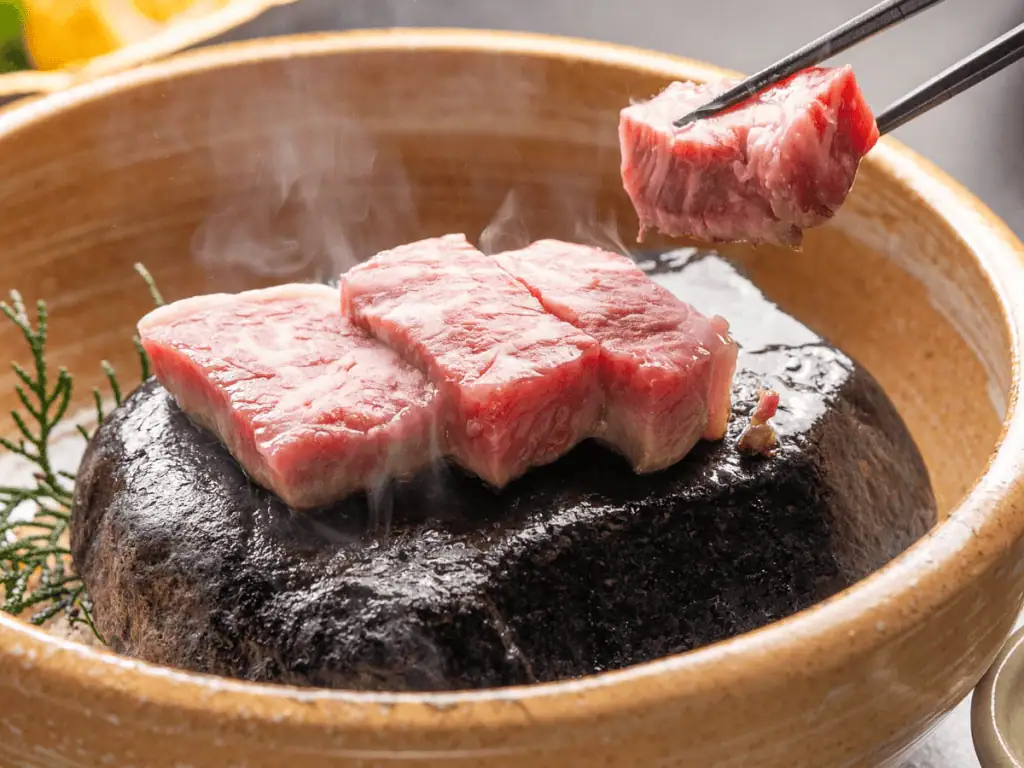
The most jarring difference between Japanese Wagyu and Western beef is the chemistry of the fat. Conventional beef fat typically melts between 104°F and 122°F, meaning it stays solid on your tongue. In contrast, high-grade Japanese Wagyu fat begins to liquefy at approximately 59°F to 77°F.
Because this melting point is significantly lower than human body temperature (98.6°F), the marbling literally turns to liquid the moment it touches your tongue. This creates a “velvet” coating rather than a fibrous chew, transforming the steak from a solid protein into a rich, buttery experience that feels more like a dessert than a traditional roast.
Intramuscular “Sashi” vs. Exterior Fat
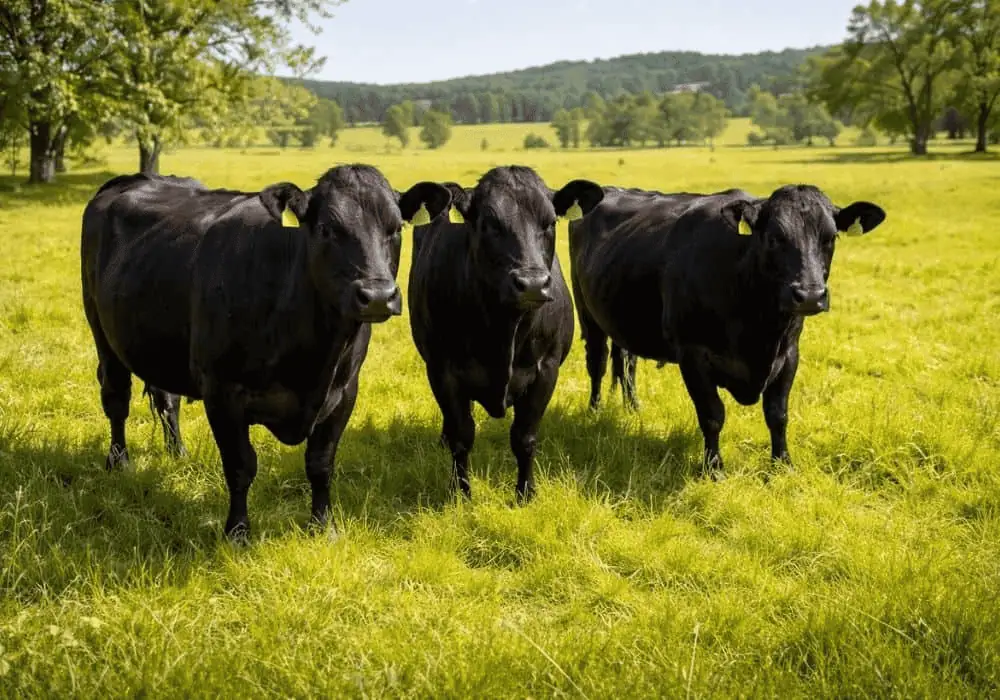
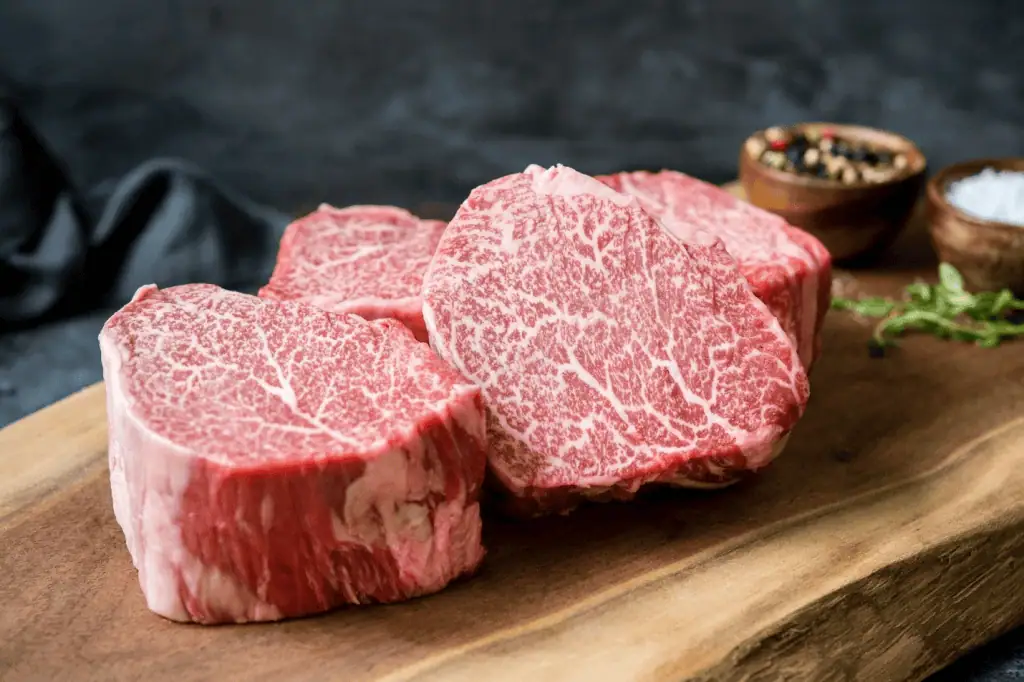
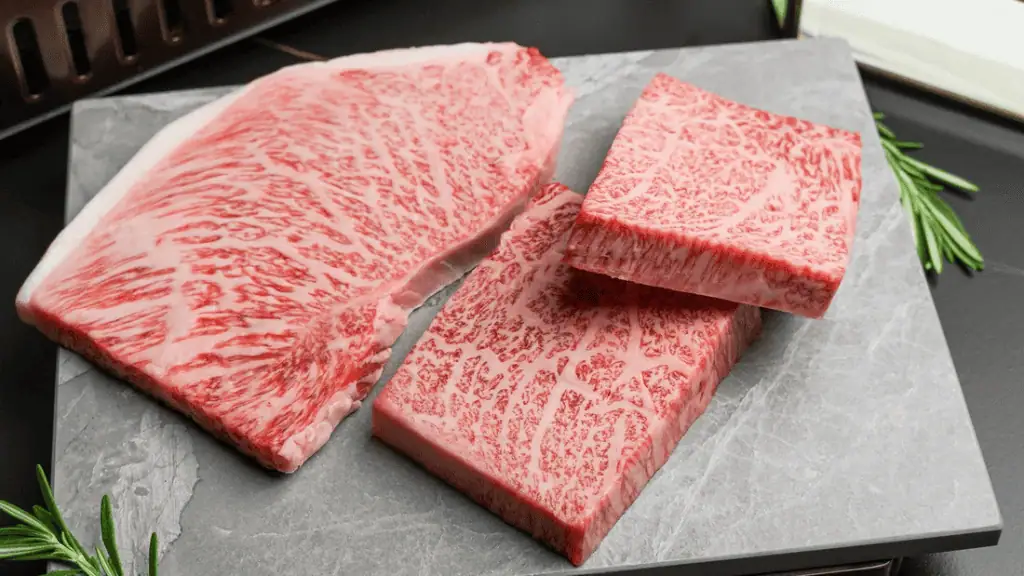
In Western cattle, fat is primarily stored in thick layers on the outside of the muscle (subcutaneous). Japanese Black cattle (Kuroge Washu) possess a unique genetic mutation that allows them to store fat in a fine, “spiderweb” network directly inside the muscle fibers, known as Sashi.
In 2026, researchers at the University of Adelaide successfully mapped the Wagyu genome, identifying the specific genes responsible for this “hyper-marbling.” When heat is applied, this internal fat bastes the meat from the inside out, essentially deep-frying the muscle fibers in their own juices and creating a texture that is uniform and incredibly soft.
The Oleic Acid “Umami” Boost
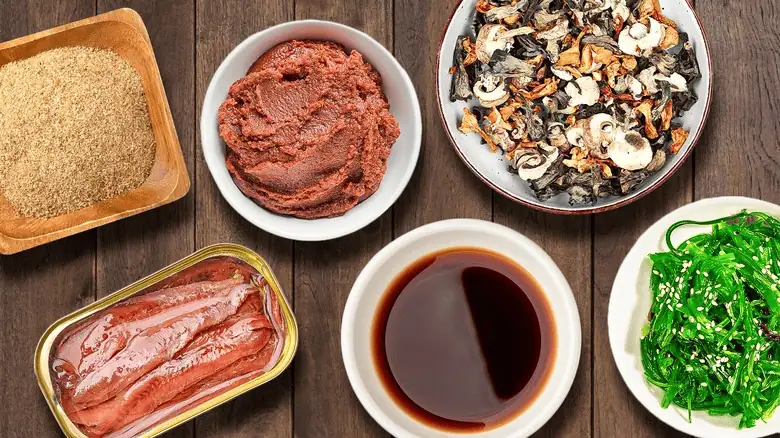
The “flavor” of Japanese meat is chemically different due to a high concentration of monounsaturated fatty acids, specifically oleic acid. This is the same heart-healthy fat found in olive oil, and in Wagyu, it can make up over 50% of the total fat content.
This high oleic acid level produces a specific aroma during cooking a sweet, nutty scent similar to peaches or coconut that is chemically absent in grain-fed Western beef. In 2026, Japanese meat markets have even begun using infrared fiber-optic devices to measure “Oleic Acid Scores,” ensuring that the meat isn’t just fatty, but has the specific “sweet” umami profile fans crave.
“National Treasure” Genetic Purity
Japan treats its cattle as a matter of national security. In 1997, the government designated Wagyu as a “National Treasure,” effectively banning the export of live cattle or DNA to protect the lineage. This has created a “genetic island” where the purity of the four Japanese breeds is maintained through strict birth certificates and nose-print tracking.
While “American Wagyu” exists as a crossbreed (usually with Angus), it lacks the 100% genetic concentration required to reach the extreme BMS (Beef Marbling Standard) 12 levels found in Japan. This purity ensures a consistency in texture and “fat-luster” that crossbred cattle simply cannot biologically achieve.
The Stress-Free “Zen” Rearing
The final factor is the environment. Japanese farmers often raise only a few cattle at a time, providing them with individual names and high-energy diets of rice straw and grain. Stress-free living prevents the animals from tensing their muscles, which keeps the meat tender and prevents the “adrenaline-burn” that can toughen the fibers in large-scale industrial feedlots.
By 2026, “Humanely Raised” has become a technical requirement for the highest grades of Wagyu. Stressed cattle utilize their fat reserves for energy; by keeping them “relaxed and happy,” farmers ensure that every gram of energy is diverted into that world-famous marbling, resulting in meat that is as much a product of a peaceful life as it is of elite genetics.
