
8 Hidden Restaurant Fees That Could Be Inflating Your Bill Without You Realizing

Dining out has become noticeably more expensive, and menu prices aren’t the only reason. Many restaurants now include additional charges that aren’t immediately obvious when ordering. While some fees are legal and disclosed in fine print, they can still catch customers off guard at checkout. From service add-ons to processing costs, small percentages add up quickly. Understanding these hidden restaurant fees can help diners make informed choices and avoid surprises when the bill arrives.
Service Charges

Some restaurants automatically add a service charge to every check, especially in larger cities or at higher-end establishments. Unlike a traditional tip, this fee may not always go directly to servers. It can be used to cover operational costs or shared among staff. Customers sometimes mistake it for gratuity and add tip, significantly increasing the final total. Reviewing the receipt carefully can clarify whether a service charge replaces or supplements tipping.
Automatic Gratuity
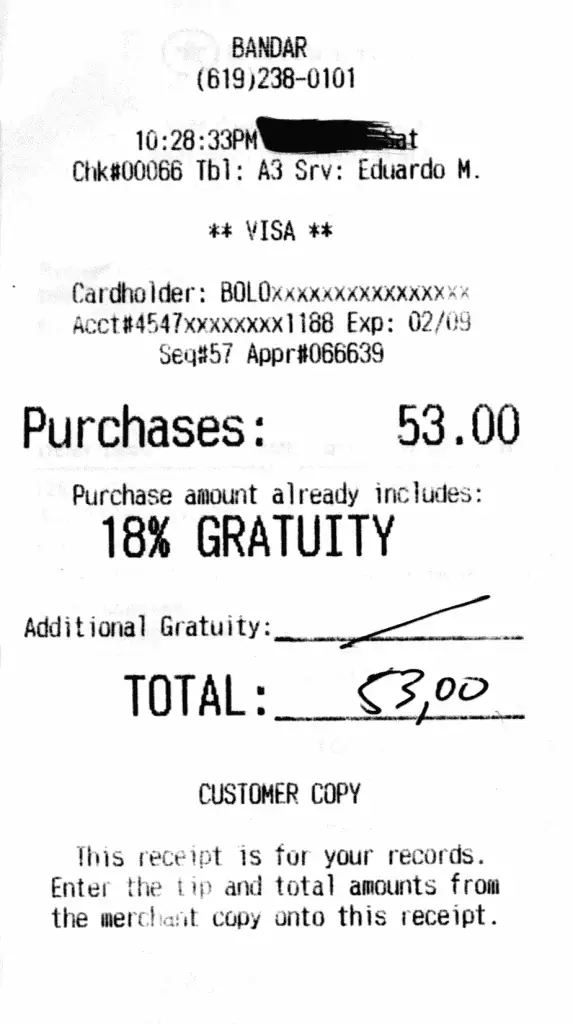
Automatic gratuity is commonly added to larger parties, often groups of six or more guests, to ensure service staff are fairly compensated for managing bigger tables. While the policy is typically disclosed on the menu or bill, diners may miss it when quickly reviewing the final total. This can lead to unintentionally adding a second tip on top of the included service charge. The practice is designed to protect servers from lost income on large-group tabs, but it can cause confusion if not clearly noticed. Carefully checking the receipt helps prevent double tipping and avoids unnecessary overspending at the end of the meal.
Credit Card Processing Fees

Some restaurants now pass credit card processing costs directly to customers, adding a small percentage often between 2 and 4 percent, to the bill. These charges may appear under labels such as “non-cash adjustment” or “processing fee,” which can be easy to overlook. While legal in many regions, the added cost may feel unexpected if signage or menu disclosures are unclear. In some establishments, paying with cash removes the surcharge, though policies vary depending on local laws and business practices. Reviewing the receipt closely helps diners understand exactly what they are paying beyond food, tax, and gratuity.
Wellness or Healthcare Fees
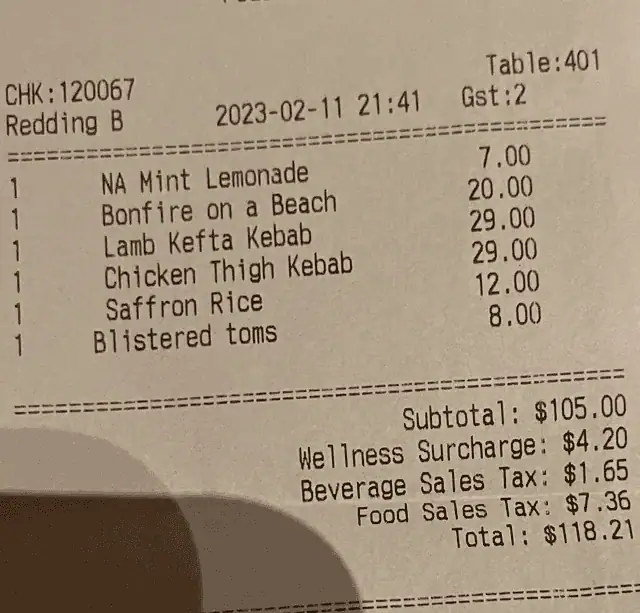
In certain cities and states, restaurants include a wellness or healthcare surcharge intended to help offset employee benefit expenses. Rather than a flat fee, it is often listed as a small percentage added to the total bill. Because it appears alongside taxes and gratuity, some diners mistakenly assume it is either mandatory tax or an included tip. The purpose is typically to support staff compensation structures, but lack of clarity can create confusion. Understanding what this surcharge covers allows customers to make informed decisions about additional tipping and better interpret the final amount charged.
Kitchen Appreciation Fees
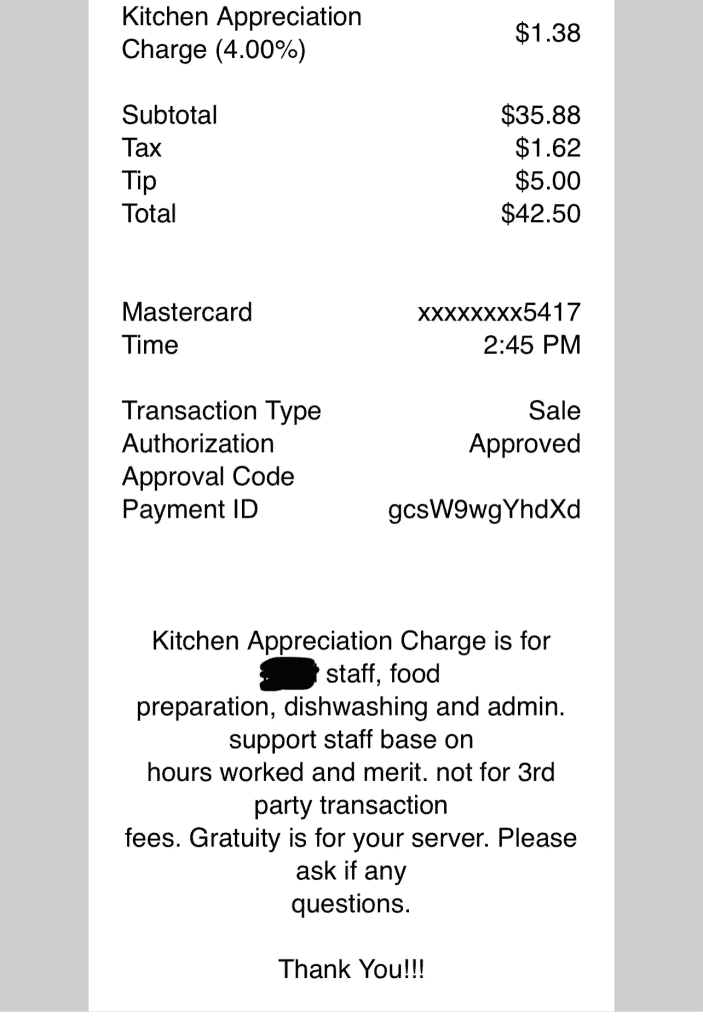
Some restaurants now include a kitchen appreciation fee designed to support back-of-house staff such as cooks and prep workers. Unlike traditional gratuity, which typically goes to servers, this surcharge aims to distribute compensation more evenly across the team. The charge may appear as a percentage of the total or as a fixed dollar amount. Because it is listed separately from tip, diners who do not notice it may add a full gratuity on top, unintentionally increasing the final cost. Reviewing the bill carefully helps clarify how staff compensation is structured and prevents overlapping payments.
Delivery or Takeout Packaging Fees

Packaging and service-related charges have become more common, particularly for delivery and online orders. These may include bag fees, container fees, or adjustments tied to third-party ordering platforms. In some cases, similar infrastructure costs appear even when dining in. Individually, each charge may seem small, but combined they can noticeably raise the final total. Because they are often itemized separately, it’s easy to overlook how quickly they add up. Checking the breakdown before confirming an order allows customers to understand exactly what they are paying beyond the listed menu price.
Mandatory Minimum Spending

Certain restaurants, especially during peak hours, holidays, or special events, enforce minimum spending requirements per guest or per table. While this policy may not always appear as a traditional “fee,” failing to meet the required amount can result in additional charges added to the bill. The practice is more common in high-demand markets or reservation-only venues. Without prior awareness, diners may be surprised at checkout. Reviewing reservation details and event policies in advance helps ensure expectations align with actual costs and prevents misunderstandings about pricing.
Suggested Add-Ons and Default Charges
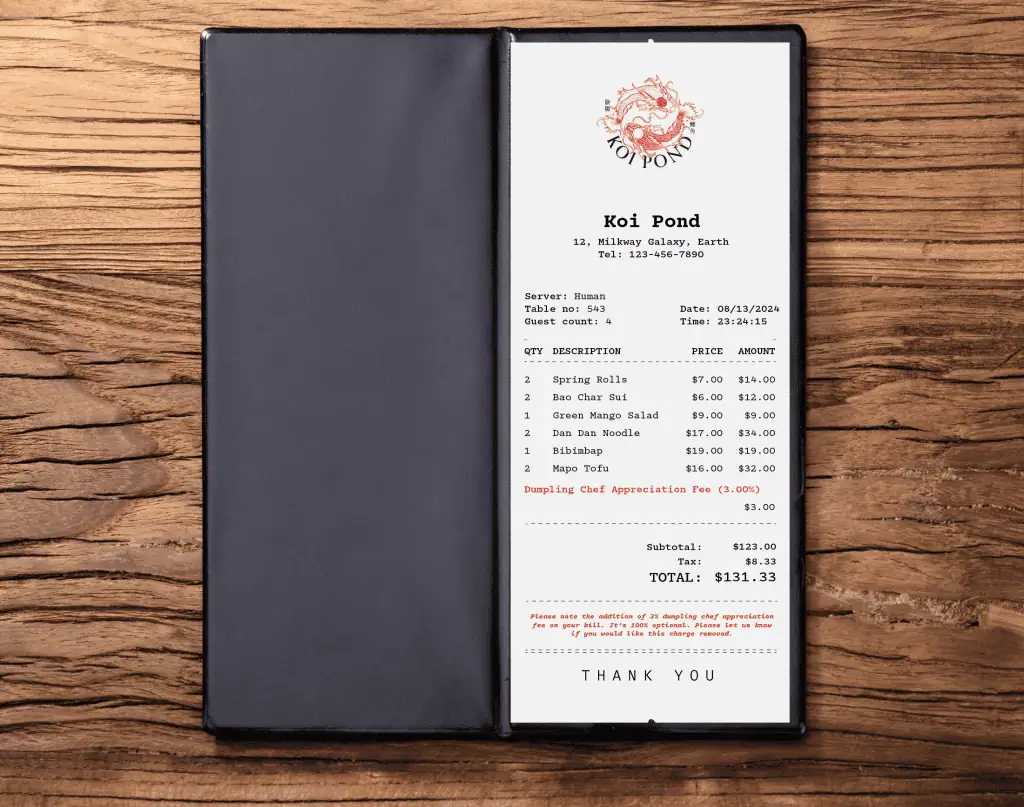
Digital ordering systems often pre-select add-ons, upgrades, or suggested sides, making them easy to include unintentionally. While these options are technically optional, they can slip into an order without deliberate confirmation. Default tipping percentages may also be calculated after fees rather than before tax, subtly raising the overall total. These adjustments don’t always look like traditional surcharges, but they can quietly increase the final bill. Taking a moment to review selections, remove unnecessary extras, and confirm tip calculations can prevent small incremental costs from accumulating unexpectedly.


