
Ingredients
For the Crust
- 1 ¾ Cup / 230 g Biscoff cookie crumbs
- ⅓ Cup / 74 g butter melted
- ¼ Cup / 50 g sugar
- ½ teaspoon / 3 g salt
For the Cheesecake
- 4 - 8 ounce packages / 904 g cream cheese room temperature
- 1 ¼ Cup / 250 g sugar
- 1 Cup / 240 g Biscoff cookie butter
- ½ Cup / 120 g sour cream room temperature
- 2 Tablespoons / 16 g all-purpose flour
- 1 teaspoon / 5 g vanilla extract
- 4 large eggs room temperature / 224 g
- ½ Cup / 112 g heavy cream room temperature
For the Topping
- ½ Cup / 120 g Biscoff cookie butter
- Biscoff cookie crumbs. optional
- Whipped cream optional
Instructions
- Preheat the oven to 325 degrees.
- Combine Biscoff cookie crumbs, melted butter, sugar, and salt. Mix until it resembles wet sand. Spread the cookie crumb mixture into an even layer on the bottom of a springform pan. Bake for 10 minutes. Remove from the oven and set aside.
- While you’re mixing the cheesecake batter, bring 8 cups of water to a boil.
- Add the cream cheese to the bowl of an electric mixer. Beat on medium speed until the cream cheese is smooth.
- Add the sugar, cookie butter, sour cream, flour and vanilla extract. Beat on medium speed for about 3 minutes until well combined.
- Turn the mixer to low speed and add the eggs one at a time. Mix just until the eggs are incorporated.
- Slowly pour in the heavy cream and mix just until combined. Wrap the outside of your springform pan with 2-3 layers of heavy duty aluminum foil.
- Place the wrapped pan in a roasting dish. Pour the cheesecake mixture into the wrapped pan. Place the roasting dish on the middle rack of your oven. Add boiling water to the roasting dish until it’s about 1 inch deep.
- Bake the cheesecake for 65-75 minutes until the outer 2-3 inches are solid and the center jiggles when shaken. Turn the oven off and prop the door open with a wooden spoon. Allow the cheesecake to cool inside the oven for 1 hour.
- Remove the cheesecake from the oven and the water bath. Carefully run a knife around the outside of the cheesecake to separate it from the pan. Cool the cheesecake to room temperature on a wire rack. Then transfer the cooled cheesecake to the refrigerator for 6 hours up to overnight before removing it from the pan.
- Remove the cheesecake from the pan and transfer it to a serving plate.
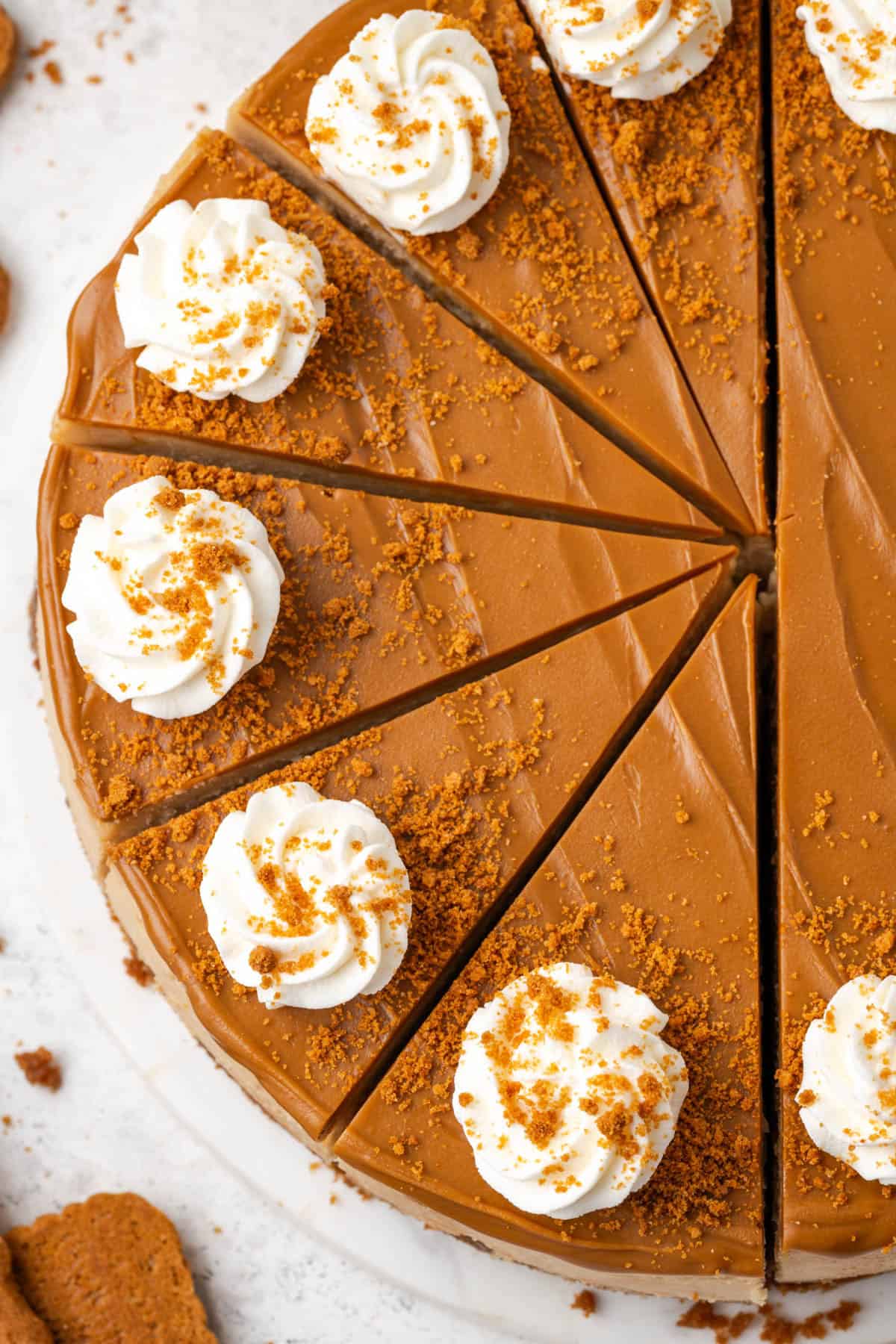
- Place ½ cup of cookie butter in a microwave safe bowl and heat for about 20 seconds until it’s a pourable consistency. Pour the melted cookie butter over the cheesecake and spread into an even layer with an offset spatula. Sprinkle the top with cookie crumbs and decorate with whipped cream.
Nutrition
Notes
Pro Tips for a Perfect Biscoff Cheesecake
- Every ingredient at room temperature: Cream cheese, eggs, sour cream, and heavy cream all need to be genuinely at room temperature before you start. Leave everything out for at least an hour, ideally two.
- Mix on low after adding the eggs: Overmixing after the eggs go in is the number one cause of cheesecake cracking. Keep the mixer at the lowest speed setting and mix only as long as needed.
- Don't skip the knife around the edge: Running a thin knife around the edge right after it comes out of the oven releases it from the pan and prevents cracking as the cheesecake contracts while cooling.
- The jiggle test: Done when the outer two to three inches look set and firm and only the very center - about a three-inch circle - still jiggles when you shake the pan gently. If the whole surface jiggles like liquid, it needs more time.
- Don't rush the chill: Eight hours minimum. Overnight is better. A cheesecake that hasn't fully chilled won't slice cleanly and the texture will be underset. This is not a same-day dessert.
- Add the topping after chilling: Don't pour the Biscoff glaze over a warm cheesecake. Wait until it's fully chilled so the glaze sets into a firm, glossy layer rather than soaking into the filling.